
“No hoof, no horse” is a saying that has been around forever for a very good reason. Our horses rely upon the foundation of healthy hooves in the same way that a building relies upon its foundation – without a good one, everything above is compromised.
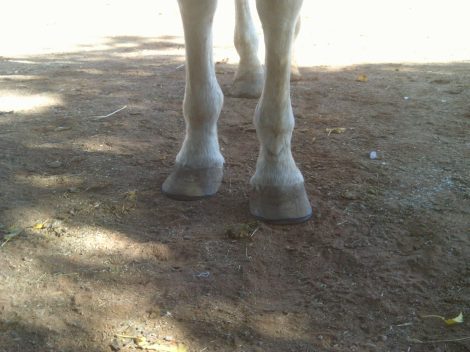
The hooves, like all body systems, are created from the foods ingested. Certainly external forces are at play as well, but, without the complete nutrition needed the hoof cannot meet these forces with strength and flexibility.
Horse feeds came about at the same time with the same philosophy as livestock feeds which were designed to create muscle and fat for meat production. The goal was not the consumption of horses, it was the feeding of muscles and creation of fat layers and slick coats, along with energy for working in fields and on roads. Horses did not live very long and a preponderance of draft blood made for larger, better equipped hooves as foundations.
Our horses now are family members living longer lives, often with smaller hooves from the breeding of lighter types for sport or show. While proper farriery or trimming are absolutely essential – the creation of the hoof structure, strength and health will be determined by diet.
The horse, being designed as a browser/herbivore requires the high fiber diet filled with herbs and forage that Nature provides (we can provide this, too!). To “feed the feet”, we need to supplement the grassy pastures and/or hays with herbs and foods that support hoof health by providing minerals, amino acids, enzymes and safe lipids (fats).
To process and extract the components then provide them in a bag of “complete feed” can often corrupt the very nutrients that are desired. Heat destroys nutrients and most processed foods are created by steaming or cooking. Chemical extraction is used to isolate many nutrition oils before they are blended into feeds and the result is a less digestible lipid with potential residues of the extracting agent. Just as processed foods leave us feeling hungry because we’ve eaten “empty calories”, the horse will feel undernourished and seek roots, barks even eat dirt in an effort to find what his body craves.
Foods that are grown with chemical fertilizers, pesticides (herbicides or insecticides), or are genetically modified present health problems that may show up dramatically in the hooves. The hoof depends on proper blood circulation and nutrient availability to keep the multiple layers of tissue intact. This laminated structure holds the bones within the hoof and lower leg at precise angles. Since our horses walk on “digits” – their legs corresponding to one of our fingers – anything out of balance degrades the entire structure and creates pain.
Humans will show traces of toxins or deficiencies in the growth, color, shape and structure of their finger nails – the cutaneous structure of the horse’s hooves is the same and serves as an indicator in this same way. The choice of organic foods whenever possible will help lessen the body’s exposure to possible toxins.
My personal belief is in simple solutions and simple, nature based practices with horses. Of course, we need brilliant surgeons for injuries; experienced practitioners for diagnosis and allopathy to assist with overwhelming symptoms – but it is the body itself that knows how to heal and what to do with the nutrients we provide!
Foods that Feed the Feet:
A quality grass hay or pasture source is the base of an equine diet.
To this base, a legume hay or pellet may be added such as alfalfa – Medicago sativa (Lucerne) for gestating, lactating or growing horses. A 10% to 20 % ratio to grass is a safe margin for the addition of the rich legume. It will add protein, calcium, biotin, silica and vitamin A (as well as many trace elements, etc.) to the base diet.
Sea Vegetables are supreme hoof support nutrients. Kelp – Fucus vesiculosis – provides over 30 trace elements and iodine, calcium, magnesium, potassium, silica, sulfur, iron and vitamin K. One tablespoon daily of powdered Kelp can be added to a bucket feed (of water-soaked wheat bran/pellets/beet pulp or specially blended senior feed or grain combination for the hard working equine) to nourish hoof health and growth (use one teaspoon for youngsters under 2 years old).
Rose Hips – Rosa species – are a good source of Rutin, Vitamin C, Selenium and Manganese. While horses do synthesize vitamin C (their milk is the only source of C for Mongolian nomads); it is a water soluble vitamin that can be used up quickly during stress or illness. The bioflavinoids and vitamin C are required by the body to strengthen capillary walls, clear edema and maintain blood circulation – essential things for hoof health, laminar health.
Flaxseeds – Linum usitatissimum – are full of valuable Omega fatty acids. It is the Omega 3’s that are most nourishing and abundant in Flax (Omega 6 is often inflammatory and can be detrimental especially during injury or laminitis – corn oil has Omega 6 fatty acids). Flaxseeds should not be fed whole – they can be gas producing in the gut. Ground into meal, pressed into oil (not chemical solvent extracted) or boiled into jelly; flaxseeds will increase the strength and suppleness of the hoof wall, nourish collagen production, maintain moist shock absorbing properties of the hoof capsule and add multi amino acid proteins to repair the wear and tear of the entire hoof. You can feed up to one ounce of oil daily; mix the meal with water into a mud like consistency (building up to 8 to 12 ounces of meal over a 10 day period) with wet wheat bran (when phosphorus is needed) or soaked pellets or beet pulp; or use one handful of seeds to a pot of water, soaked overnight then boiled for one hour to make a thick jelly. These ratios would be per horse, per day except for the jelly which can be fed 3 to 4 times a week.
Nettles – Urtica diolica – when dried (the herb leaves are dangerous fresh as they “sting” the skin and cause histamine reactions!) can be fed, one handful dried leaves to the bucket feed or made into a tea, per day per horse. They are full of silica which holds intact the structure of all skin, nails, hair, hooves and claws. Nettles are rich in iron which creates hemoglobin, the oxygen carrying property of blood. This iron is organic – an inorganic iron supplement has been proven toxic to fatal. Copper is also present in nettles and required along with the iron for support of circulation and nerve/muscle fiber functioning. Nettles aid hoof health by also strengthening nerve endings and receptivity.
Fenugreek seeds – Tigonella foenum-graecum – are rich in Lysine (amino acid that maintains normal cell growth, regulates pineal gland and is necessary for formation of collagen in connective tissue – lysine is necessary for all amino acid assimilation; the building blocks of protein!), vitamin A and vitamin D (it compares to fish liver oil, an animal source not recommended for herbivores). Fenugreek internally and externally aids in the release of abscesses.
Black oil sunflower seeds and pumpkin seeds are rich in oils, vitamin E and minerals as well as the amino acid Methionine (essential to hoof health, it is sulfur based to protect and maintain the integrity of skin, coat and hoof). Sunflower seeds with hulls can be fed from 1 to 2 cups daily; hulled – feed ½ cup. Raw, dried pumpkin seeds can be fed up to ½ cup daily. They also have anti-parasite properties and are prostate “friendly” (male horses do have prostates!).
The horse on fresh pasture receives abundant enzymes. A horse with no fresh foods in the ration will need supplementation of enzymes for proper digestion of all the other good foods provided. Enzyme rich, fresh additions can be yams, carrots, bananas, oranges, fresh parsley, peppermint, garlic and/or papaya flesh. If your horse is lamanitic, IR or Cushinoid, avoid the fruits and roots with sugar content.
“Feed the feet” and your horse will reap the rewards with better health and soundness.
 Stablewomen