
We all know what we want in a horse, what does a horse want from us? It is an important question when we consider our responsibility for the life of a sentient being, totally dependent upon us.
We need to make their lives interesting, but safe. Enrichment means adding varied terrain, spreading out feeding stations to mimic natural grazing, taking horses out on walks in-hand and riding in groups to add herd like interactions and confidence.
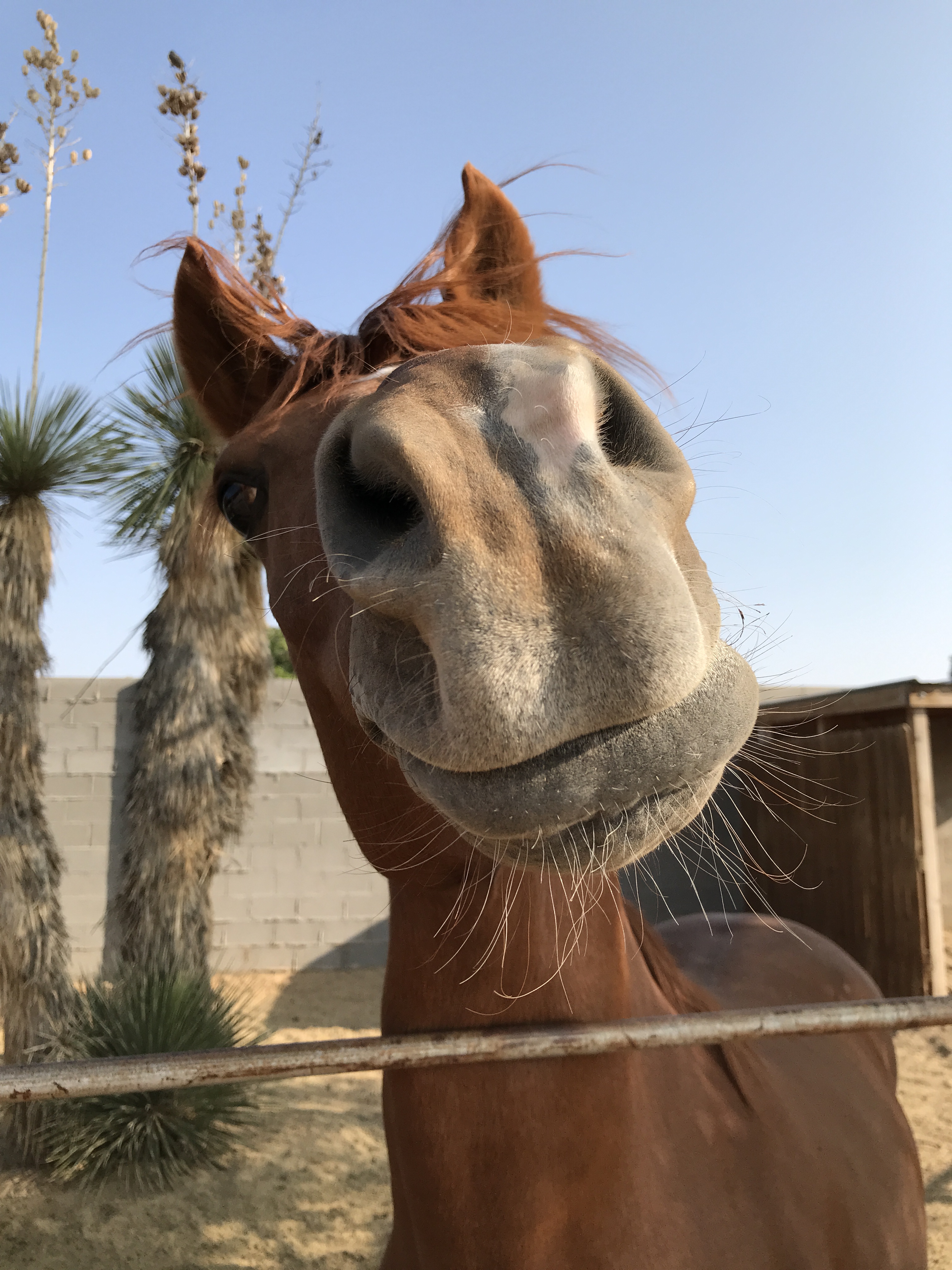
Safety means building proper, visible fences and providing shelter from wind, rain and sun. Horses need companion animals (and equines are the first, best choice). Horses want us to spend time with them and observe their preferences. People do things for “looks” that horses would not want if they could have their say. Facial hair is often shaved to make a nice clean look for competition. Horses need their facial whiskers to act as “feelers” so they don’t bump their eyes in the dark and because they cannot see the ends of their noses, whiskers alert them to where objects are. In parts of Europe it is now illegal to remove whiskers from horses. Leaving tails as long as possible means they have natural fly swatters.
Track systems or large fields let them be in motion and bare hooves keep them in touch with healing earth energies and allow the hoof to be a flexible foundation. Horses want tasty food that is nourishing and available most of each day. So, providing nets full of grass hay (no Sudan, Johnson grass or Fescues) scattered about their premises helps relieve boredom as well as feeding them more naturally.
Horses’ lives can become boring. Imagine living in a box stall 20 hours of each day. Imagine coming out of, what to us would be like living in a closet and being placed in a round pen to be chased about to “let off steam”. Then you’re saddled and bridled and expected to respond to a rider’s whims and wishes before being put away, back in your stall to await the next day and another ride. No wonder horses get all manner of vices and odd behaviors as coping mechanisms.
Imagine if your drinking water sat out day after day, being topped up but never cleaned. The taste would become off-putting and as you drank less, your digestive system would begin to fail. I was taught as a child by a British Horse Society trained instructor who made us drink out of our horses’ buckets. Nothing makes you more aware of and attentive to clean buckets of cold, fresh water than having to drink from it yourself!
Horses need some REM sleep each day/night. In a herd, they will tend to have at least one “guard” who stands while the others lie down. Horses can sleep standing up, but they do not go into the restful REM unless they can get down and feel comfortable. Some manner of soft bedding makes that possible. Sand, peat, shavings, straw or soft earth is needed to encourage real rest.
Horses need access to minerals, especially salt, to stay healthy and at our Sanctuary; we prefer the mineral rich Himalayan salt, tied in different locations for them to savor. When the weather is changing or a horse has hoof issues, we add an ounce daily of the course ground Himalayan salt to their bucket feeds as well.
Tree shade is best shade, but some tree bark and/or leaves are poisonous to horses. The worst are Yews, Red Maples, Black Walnut, China Berry and Cherry. Trees that are healthy for horses, even if they munch on them are Willows and Mulberry trees. If horses could mention it, they would tell us that they love trees.
I lived in a huge pasture with my two geldings for several months. I would walk around with them at dawn as they moved from hills to depressions, finding cool air and warm spots; settling into cover under the Cottonwoods and drinking from tanks where I had floated small pine logs so the bees would not drown. They would lie down in a big sandy wash above the small river and I could lie with them (my older Anglo-Arab serving as a pillow) and sleep safely until time to roam again, grazing on grasses and young plantain. There was a huge Black Walnut tree that they wisely avoided. They also knew when the bees were most active and we wandered to the edge of the pasture to avoid disturbing them.
I want that kind of life for our horses in Sanctuary. We are in the high desert and the pasture is not possible, but the roaming and exploring and herd interaction is something we can provide.
And I can spend time with them. Observing their daily preferences and moods; getting still and quiet with them allows me to understand each of them as an individual. It is a privilege to be with a horse.
What do horses want from us? Consideration, kindness, water, food, shelter and friendship – these are the basic ways we can enrich their lives and support their good health. In turn, we get loyalty, healing, compassion and trust from a being whose ancestors built our civilization. Talk about a Win-Win situation!
 Stablewomen