
How many people have had a horse since the beginning of his or her life? There is such value in knowing about everything that has happened to a horse, both physically and emotionally. Questions are answered easily about “what is that bump”, “how did that hoof get like that”, “why does she always get scared of those”?
Because the horses that come to us in Sanctuary can arrive with many mysteries, we often wish they could simply tell us about their past and their feelings. If we are open and really pay attention, though, we can figure out a lot about a horse. And if we get background information, we can set things up to comfort the new arrival with as much that is familiar as possible. Horses are comforted by familiarity, especially when what was familiar was kind.
Each horse comes to us with a well of experiences. Each experience in his life is like a “drop” into the well, like water filling a vessel. We can tell early on if a new horse’s “well” is of mostly positive or mostly negative experiences. The horse will approach each new thing with the expectation of what has usually happened.
With the horse whose life has had mostly positive experiences, there is an openness and curiosity about his surroundings and the people who have contact with him. The horse with a well of negative experiences will be suspicious of anything new and will often shut down to protect his emotional body if he thinks something negative is happening. The horse who has experienced aggression will prepare for fight or flight. We can even overfill a well of negative experiences with enough positive experiences to eventually overcome the negative – and, sadly, the opposite is also true.
A friend of ours bought a lovely horse whose sellers told stories of how to “handle” him and the equipment to use. After bringing him home, our wise friend took the time to listen to her new horse. She backed off of the severe equipment. She changed from a bit to a bitless bridle. She built a relationship with this horse. Now they have a bond and trust in each other that most people dream of. Instead of taking the human advice, blaming the horse, insisting on maximum “control” and ignoring the horse’s perspective – she put herself in her horse’s place and thought about how she would want to be treated. Because she has a lifetime of experience with very many horses, she had a personal “toolkit” to draw from and help her horse.
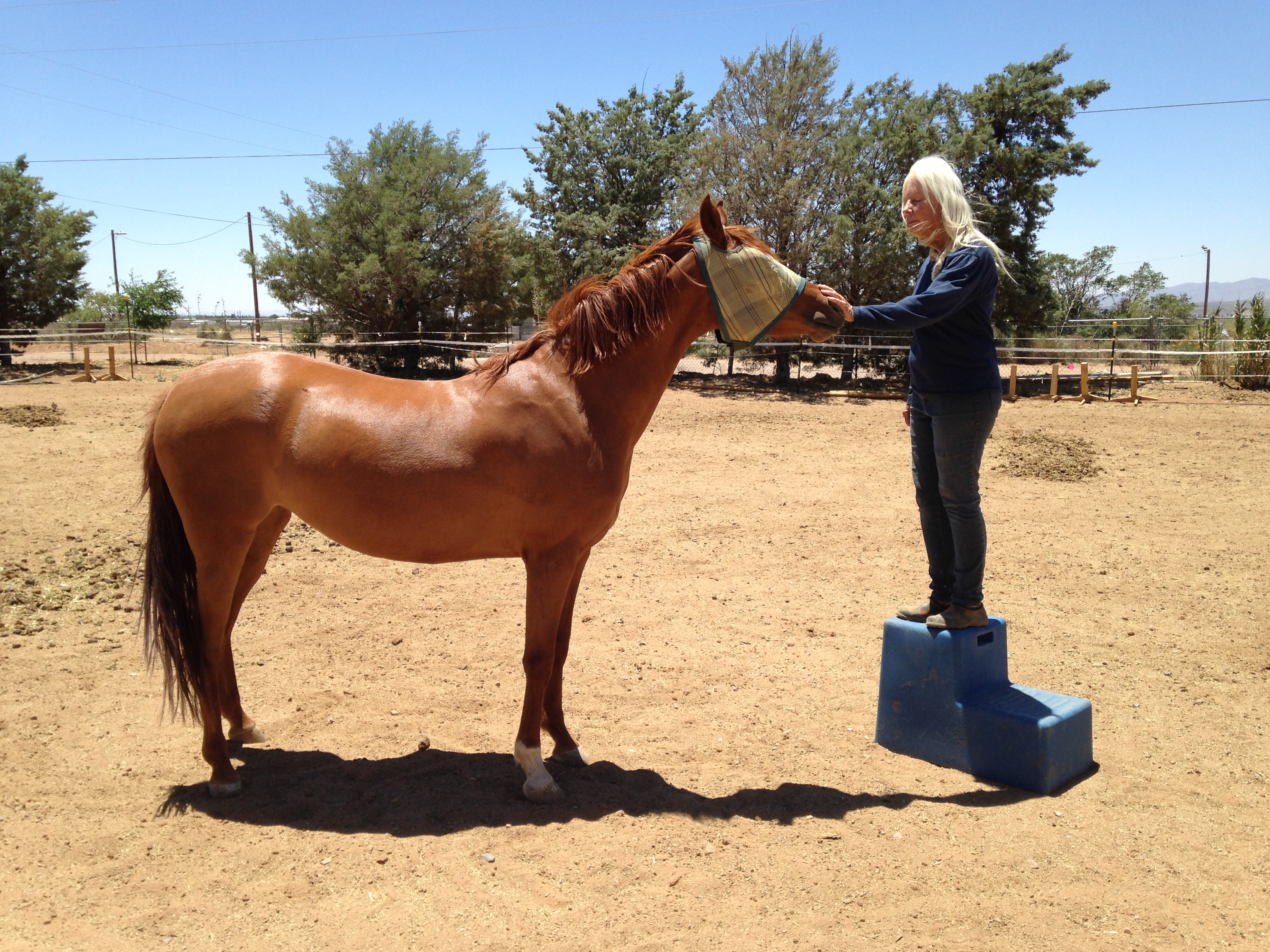
I have worked with a lot of people whose first instinct is to blame the horse for anything that goes awry. I always told all of our young riders that they can take credit for the good things they get the horses to do. It means they communicated clearly and when a horse understands something, he is able to respond. This also means that, when we are unclear or abrupt, the horse cannot be as responsive as we want him to be. If we take credit for the good stuff, we must take responsibility for the “bad” stuff. And, horses do not have to let us handle or ride them. They are ten times bigger than we are! They partner with us because of their kind natures and their generations of bonding with humanity. If we work to understand each horse as an individual, we can build a foundation of trust.
 Stablewomen