
I am feeling keenly aware of the disturbing nature of miscommunication in my own life and this makes me think about how we need to maintain clarity, consistency and compassion in our dialog with horses.
My phone went down and the calls to me were broken up into hearing every third or fourth word. This is likely how we can sound to our horses when we are working with them and become distracted or simply inconsistent with our requests. It can be difficult enough to communicate with a member of our own species in a shared language, let alone try to convey our desires to a thousand pound prey animal whose instincts tell him that we are predators.
How we accomplish the almost magical feat of rapport with a horse is by not only putting our desires forward but by listening as well. And when we work with a new horse, it is imperative that we find out as much as possible about how that horse was schooled. This will help us avoid triggering fears (in a horse who perhaps was in a wreck while riding in a trailer), confusing the horse (one might neck rein in western style, another may direct rein in English style) or simply asking more of the horse than he has been prepared to do.
Communication with a horse is actually dialog and not the mechanistic force of signals used as if driving a car or riding a motorcycle. The dialog must be clear so the horse has no doubt that it is meant for him. We must get fully present to engage with a horse. If we are not, his realization of that fact will keep him distant emotionally because he can only be as present in the moment as we ourselves are present.
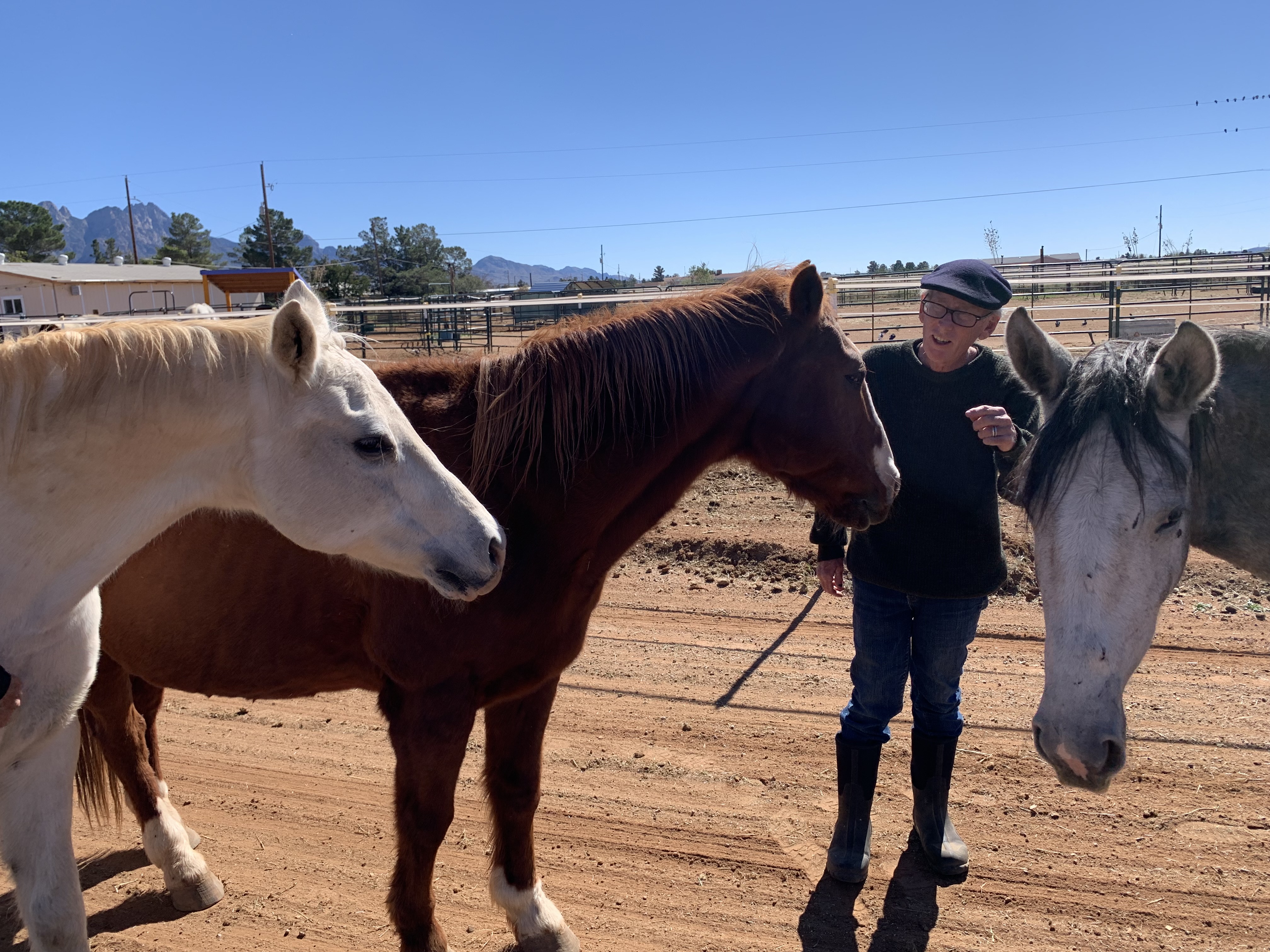
Consistency is the real key to gaining the horse’s respect and attention. If we allow something, such as eating grass on a trail ride; then the next day we “punish” the horse for eating grass, and allow it the next day, we will set up confusion and disrespect. We must “be the same person” day by day. Equine mental health is absolutely tied to how calm, compassionate and consistent the human handler remains.
My advice when anyone acquires a new horse is to ask the previous humans about not only diet and exercise programs, but to ask things like if the horse ties or needs a quick release snap; does the horse stand at a mounting block; does he accept being sprayed with fly repellent; those type of questions (considering your own plans and routines) can help to avoid some serious, even dangerous miscommunications.
And we can always change an equine’s routines and responses; we just must remember to do so gradually and with clarity, consistency and compassion. One cannot take a horse who is used to having his stall door opened, allowing him to run out on his own, and expect calmness when we try to catch him and lead him out instead. He will be a product of his conditioning and habits and these can only be changed by teaching new habits as substitutes. Therein lies understanding, safety and rapport.

 Stablewomen