
I saw a funny statement the other day, “How do you make a million dollars with horses? Start with two million!” It makes us chuckle, but it speaks to a truth that is hard to ignore. The price you pay to buy a horse is the least amount you will pay.
And when we set out to care for a horse either at home or in livery (boarded), the day to day choices determine long term costs. Because horses are built to eat pasture or hay near continuously, a diet based upon either or both makes the most sense and creates good health. If you have to skimp on something, never make it the feed! Buy or insist upon the highest quality hay available. Equine health is just as dependent upon whole, unprocessed foods as is our health. To feed poor or very old hay and then add processed, composite feeds full of grain products and fats to make the horse “look good” is a false economy. It takes its toll on the health of the horse’s organs. If a horse is racing, competing heavily, lactating or recovering from illness it is possible that simple hay, pasture or pellets cannot be supplied in high enough quantities to meet that horse’s needs. This is when simple grains fed “rolled” (to avoid choke) need to be gradually added.
Even if you have wonderful pastures, horses will require hay in the winter. The hay should be free of weeds, between 3 and 6 months old if possible, have no mold or dust and there should be some “aroma”, a sweet smell. Grasses are the basic equine food and legumes (alfalfa) make nice additions. At Dharmahorse, we sometimes save money by getting the large half-ton bales of grass and alfalfa hays. A bit harder to transport and to cover (pallets and tarps serve us right now) we find it is costing us near half as much as buying the smaller bales. And a healthy, whole food diet saves on Vet bills.
Diligent care and awareness also reduces Veterinary costs. Catching any disorder early can even be a life saver. Know your horse well. Be aware of the consistency of his manure because it will tell you the condition of his overall health. A horse will usually have from 8 to 12 bowel movements every 24 hours.
To economize on facilities, you can reinforce questionable fences with electric fencing. It is cheap, effective and quick to install. A horse does not need a posh box stall. As a matter of fact, horses kept in small enclosures with limited air flow are prone to respiratory disorders. A horse needs shade and shelter from pouring rain or hail (a roof) and wind break (here, a west wall mostly). He may rarely choose to use it, but should have that option.
If your horse can go barefooted, all he will need is to have his hooves trimmed every 6 weeks or so. The bare hoof is healthiest, but if you ride on rocks; boots are a kindness (and will add some expense). The horse’s teeth need to be checked for sharp points and the Vet will have health recommendations beyond that. If you can organize a Veterinary visit to your area or a gathering of clients in one place, you may be able to save on the fee for a farm call.
We check feed stores for used tack for sale. I found a bag of 5 pair of barely used hoof boots one time for $100.00 (about a $900.00 value!). If you clean and oil tack often, it lasts longer. Same goes for winter blankets, grooming tools, etc.
We grow and create most of our medicines at the Sanctuary using herbs and plants. We make colloidal silver with a machine that cost very little and use it to kill pathogens internally and externally!
Some horse owners get together, not only for Veterinarian and Hoof Care visits but to buy hay in bulk, bring in an instructor, share a tractor, haul together to competitions and “horse sit” when someone has to be out of town. A little creativity can go far!
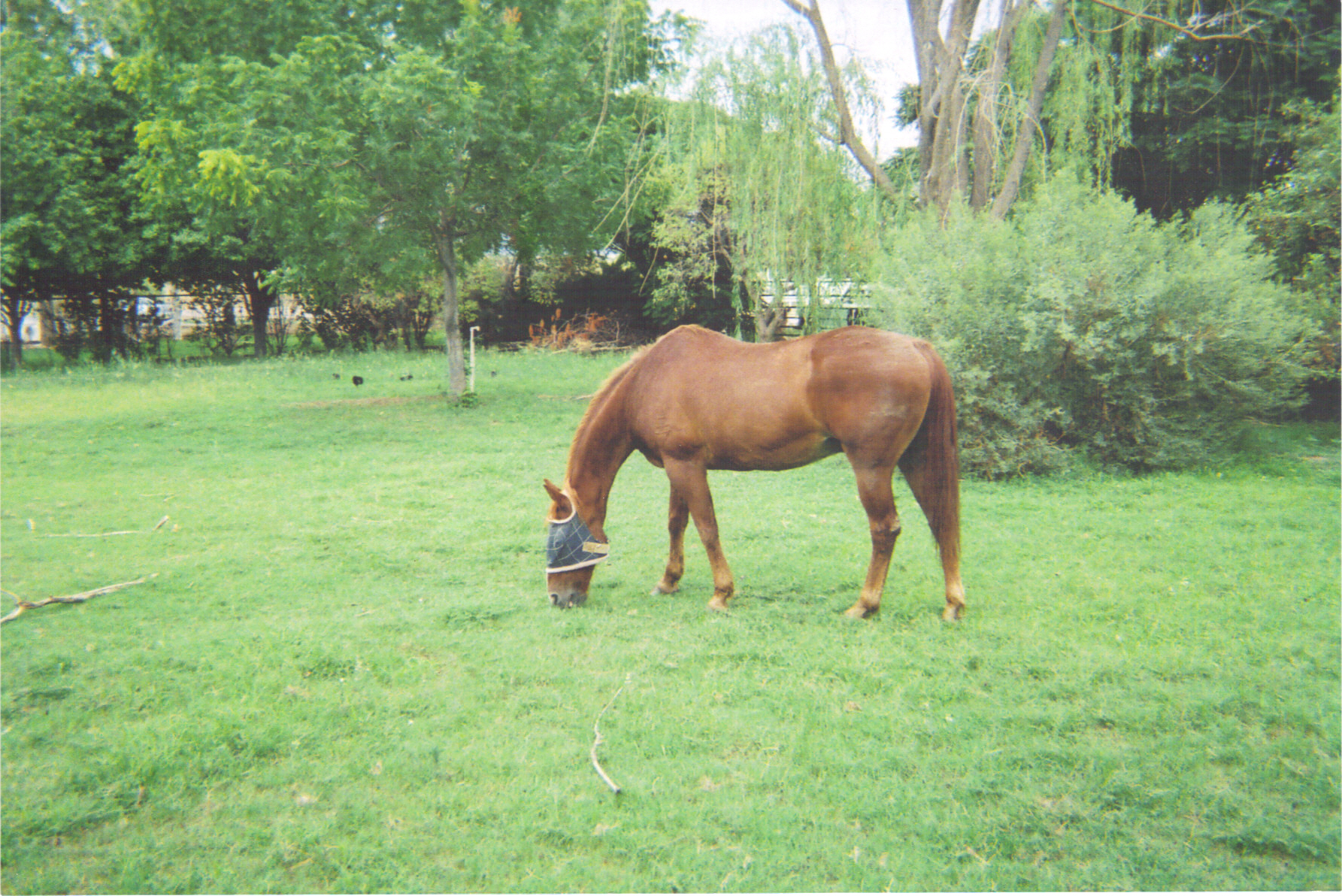
SIDEBAR: A general guide to expenses with horses is:
A horse will eat about 2 tons of hay per 6 months. In our area, that means about $350.00 a ton for regular bales or $140 per ton for a giant grass hay bale; $200.00 a ton for a giant bale of alfalfa from the farmer. If a horse eats grains, the hay needed will go down, but the grains cost more. A hoof trim can run from $40.00 to $75.00. Tooth care can cost from $75.00 to $300.00 and more, if complicated. De-worming about every 6 months is a minimal cost for the paste ($6.00 to $14.00). A horse needs to drink from 15 to 30 gallons of water daily to remain healthy and that could be more in extreme heat. Boarding a horse in our area can cost from $275.00 per month to $550.00 per month depending upon the facility. Planning ahead and knowing what general expenses can be will help cut down on the “surprises” that come with horse ownership.
 Stablewomen
I wrote this last year – the cost of hay elsewhere may be similar to last year’s costs… but this month, right now, hay has DOUBLED in cost here. It is difficult to fathom, but 100 lb bales are $32.00. Giant bales are up to $300!