

I started a book over a year ago, got three chapters written and never got back to it (running a horse sanctuary!). There is some scary weather coming… something in this first chapter might be helpful to someone and the concept the book explores, “grabbing mane” is a useful one!
“Grab Mane!”
A philosophy for life, not just riding.
Preface
When you ride horses, sometimes the unthinkable happens. You can find yourself trapped on a trail with nowhere to go but up the side of a cliff. You can be rolling along to your next fence to jump and your horse stands back, his gallop becomes a slow motion rocking onto his haunches and rising of his front end as he leaves out a stride and launches you both much higher and farther than expected. To save you both, you grab mane.
When I gave riding lessons I always taught students two things right from the beginning – how to do an emergency dismount and how to “grab mane”.
At my school in Roswell, New Mexico, we were at the end of my big arena, discussing tactics for a course of jumps we had set up. There was a monstrous storm, quite far in the distance, full of flashing lightning. We heard no thunder, so I kept teaching. Until I saw the girls’ hair and horses’ manes rise up with static! I yelled, “emergency dismount”. All the girls hopped off safely, I told them to let go of the horses (who ran back to the barn) and we all squatted low to the ground and hurried to the barn ourselves. Everyone was safe. We got inside the metal roofed barn, put horses away and ended lessons for the day. When that storm arrived, in a matter of minutes, we lost an apricot tree to a lightning strike!
With lessons over jumps, I taught students to grab mane whenever they felt the least bit out of sync with their horse. The goal was to keep the rider from using the horse’s mouth to “pull” them over the jump. The outcome also kept students mounted when they got to the base of a jump off-stride or became nervous during an approach.
On trail rides, I coached them to hold onto the mane going up steep hills or when a horse got excited and a bit too perky, especially if it felt like the horse was going to spin around. Grabbing mane gave us all the chance to realign ourselves with the energy and motion of our horse and recover our seat. Just those few seconds of “holding on” could get us back in alignment with the horse. I have grabbed mane many times in my life.
And I began to realize that I used the technique, metaphorically, throughout my life. Nothing in my life has been particularly easy. That is a truth for many of us. How we face our challenges can be how we come back, over and over, to alignment with the beast that we ride from childhood to old age. It is an adventure, this life. Having modes of regaining our strength and courage when challenged can keep us safe and sane. Grabbing mane is necessary to give us that moment of security, of rebooting the moment so we can face it. And sometimes, it is prudent to do an emergency dismount.
Chapter One
Storms
“They come and go”
It was 1996. I was living in a cottage on the side of the Organ Mountains in New Mexico with my three dogs and one horse, “Snookie” (“Breath of Snow”, a registered Appaloosa gelding I had raised from birth, then in his late 20’s). He had been my Eventer. I started him under saddle myself and competed him into his teens.
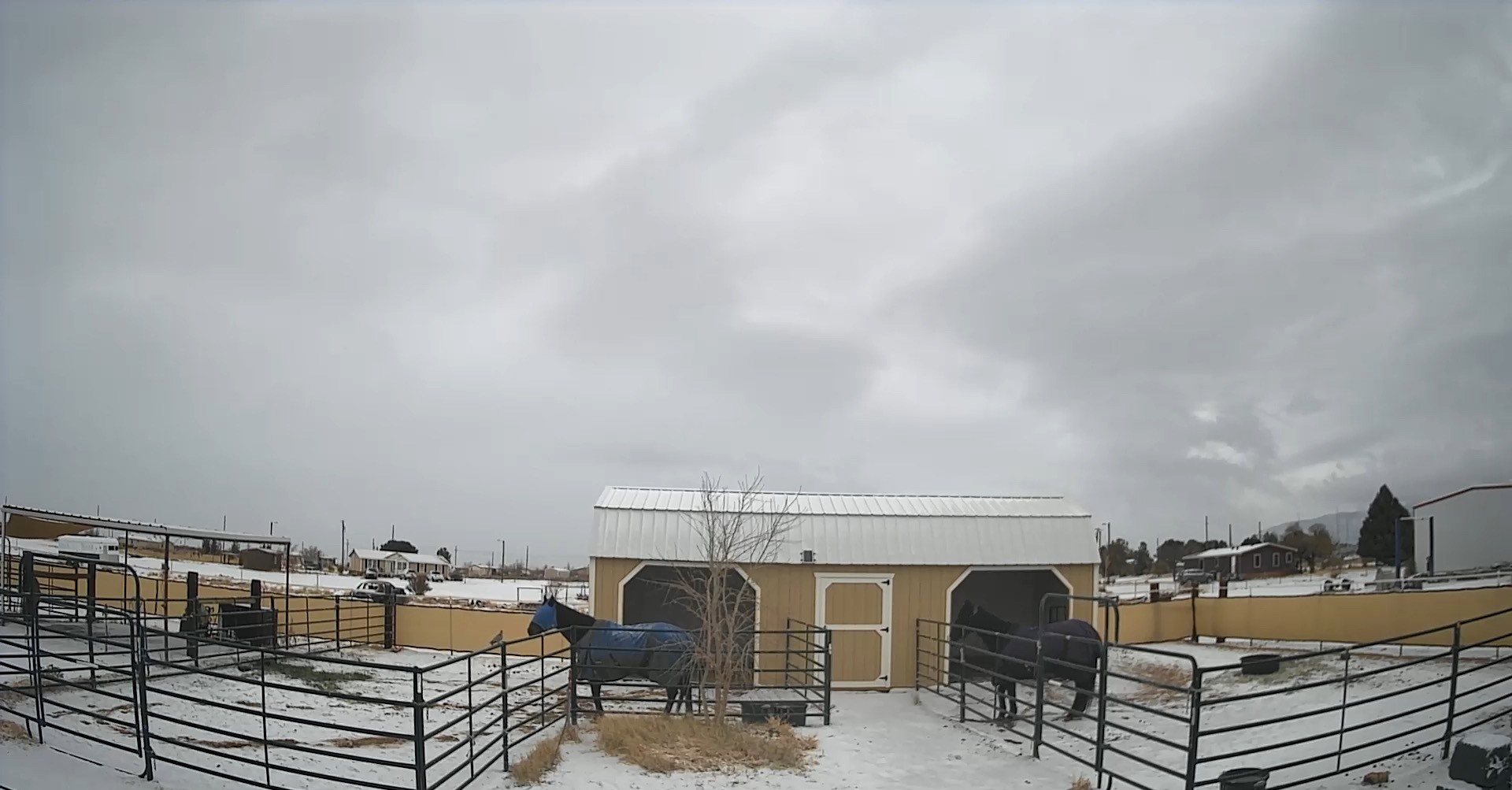
Snookie lived just below the cottage in a shelter and pen I had built myself. He had mainly shade from the roof, not much protection, really. The dogs lived in the house with me and had a large yard with an 8 foot by 8 foot concrete block storage building inside that yard. Everything was on a slope, of course.
The cottage was only 12 foot by 24 foot. It had a tiny kitchen, a lounge area, a tiny bedroom and, considering, a rather large bathroom with a huge bathtub. I had put a “bunk bed” against a wall in the bedroom. The dogs (Namaste’ and Ely were English Setters, Basil was a little stray dog I had rescued) slept on the bottom bunk. It was a comfortable home. I became a master of tucking things into corners and stacking crates, like shelves, to store more stuff than I actually needed. And I was organized. I often said, “a place for everything and everything in it’s place; here, some places have multiple things”. I knew where all the things were.
On the east side of a real mountain, the weather could be dramatic at times. My landlady, Nancy, had told me early that morning that we were in for a bad storm. I decided to run down the mountain to add to provisions and get back as quickly as possible.
I was driving home from the city when the sleet started. Towering clouds had been building for a couple of hours, blocking the sun and threatening what was to come. A strong head wind from the east was screaming down the mountain. It made my old Jeep struggle and the moisture froze on my windshield, the wipers unable to push it away. As I pulled into the driveway, I saw Snookie with his bum to the wind, head down, shivering and looking miserable. He was wearing his New Zealand rug. The days had been bitter cold, the nights still, long and daunting. It was about to get worse.
I had a few hours before dark, but the storm was settling in and the black clouds blocked the sun. It felt later than it was. As I entered the house, the dogs greeted me with unusual enthusiasm. I realized the power was off. I started feeling vulnerable with a twisting in my stomach. Those weather reports had been dire.
We were facing an ice storm. Temperatures would be below zero for the next few days with nights feeling like 20 below and winds whipping up to 70 and 80 mph. I had known this when I went to town for supplies. I bought batteries, some extra food, candles and bottled water. I got my bags into the house and took a moment (grabbed mane) just to collect my thoughts on what to do next!
I was blessed with a gas furnace that did not use electricity – this saved the dogs and me over the next 3 days. I had the gas stove that I could light with a match. And by some miracle, the gas stayed on throughout the storm.
I quickly took the dogs out to potty because it was only going to get worse. I saw Nancy behind the cottage and she immediately told me to put Snookie wherever I could. “Take him in the house if you have to”, she yelled to me. I looked at the storage shed…
The ice pellets, no longer slushy sleet, stung my face. The wind was increasing. Dogs inside, I ran to the shed and pulled all of my things I had stored there out into the yard. I opened the small window on the side of the shed – horses need air! Pulling my purple knit hat as far down as possible, I grabbed Snookie’s halter and lead, ran down to him and trotted him up to the yard. I got him into the shed where he stood diagonally, left his halter on and set the lead beside the door that, thank goodness, opened outwards.
I was now really leaning into that wind. The wheelbarrow was of no use. The ground was now coated with ice and my gloves offered no real warmth, my hands were seizing up! I took great wads of hay, in my arms, over and over to the shed. I made a pile in front of Snookie, who was shaking less now that he was out of the wind.
I grabbed buckets and stacked them inside the house. I put a huge pot of water onto the stove and lit the burner. I left water trickling in the bathtub. It was the farthest faucet from where the water lines entered the house. Maybe it would keep pipes from freezing (it did).
I filled a big tub with wheat bran, got a bucket of warm water in with Snookie and made him a warm mash after feeding the dogs. The sound of the ice hitting the house was deafening. I felt like crying but didn’t have time for it. The darkness was wrapping itself around us. I lit candles in the house, set them up where the dogs couldn’t bump them, well away from curtains and the like.
“Grabbing mane”, I considered how the blowing ice might seal doors shut! I sat with Basil in my lap, brainstorming how I could handle that. Then, what came to me, was an idea from living in West Virginia in my youth. In winter, snow and ice would ball up in horses’ hooves and we would coat the cleaned soles of hooves with Vaseline to prevent it sticking.
I didn’t have much time. But I had Vaseline. I, bare handed, coated the edges of the front door (the only door to the tiny house). Having it open, the now snow/ice mixture was blasting inside. I hurried! Then I ran out to make sure Snookie’s shed door was not shut tight – but it couldn’t be too loose, he could not be allowed to leave that shed. I tied the door knob, with his lead rope, to a T Post in the ground at the side of the building. I set a piece of concrete block to hold the door “cracked” open and prevent it slamming shut.
That little concrete shed was sturdy. Inside, you could not feel the wind affecting it. In the house, the walls would shudder with big gusts. I was aware of how dark it was in there for Snookie. But he did seem at ease now, protected, and his breath made clouds so his body was warming up internally.
Back in the house, the water was simmering on the stove. I turned it down low to keep some hot water available for all of us. Then I thought about the open flame and the little furnace. It was officially night now. The house was pretty well sealed up, so I cracked open the bedroom window. Dogs and women need air.
Making a cup of black tea, I sat by the window that faced Snookie’s shed. The dogs curled up at my feet. I put goat milk and sugar in the tea, held it as I stared where the shed was… I could not see it, but I knew Snookie was sequestered in there, as safe as I could make him. Swirling steam from the cup of tea fogged the window pane. The ice had made strange ridges at the outside corners of the middle panes. The steam that fogged the glass turned to ice crystals inside! We might be in trouble. I “grabbed mane”.
Trying to figure how the dogs could go potty, I put down two flat plastic garbage bags on the living room carpet and placed a battered old beach towel over them. Then, I peed a little bit on the towel. I know, it sounds awful. But I needed a way to “give them permission” to go on the towel. It actually worked.
Back out to check on Snookie, flashlight in hand. I had stayed bundled up even though the house was relatively warm. I struggled through the shed door, talking to him constantly. He was munching hay, had finished his mash and pooped a big one! I was elated. His water bucket was one third full, but was ice. I felt under his rug and he wasn’t exactly warm, but was dry, not shaking and not cold to the touch. I got him hot water from the house and filled his bucket, made one more bran mash adding herbs (turmeric to aid his circulation, anise seed for his lungs and linseed meal to keep gut motility) then left him for the night with prayers in my heart and Reiki set up streaming to him.
This horse had been with me most of my life. Literally hundreds of equines had crossed my path and Snookie had been my companion through every high and low, each relationship with a human (some requiring “emergency dismounts”, even police involvement with abuse!) and he knew all my secrets. He had carried me over cross country courses, danced Dressage with me and traversed trails in several states. Heart Horse was an understatement for what he meant to me.
The phone had died with the electricity. I was an amateur radio operator. I filled my hand held radio with new batteries and went on the Repeater, hoping to connect with my brother, Billy, in the valley. After listening to other HAM’s talking about the storm, I was able to check in and make a call to Billy. He had been monitoring the Repeater, hoping to hear from me. He and my Mum were okay. Their power was on, they only had snow, no wind and were prepared to weather whatever came their way. I told them we were safe, about how I set things up for Snookie, how I had been able to run to town before it all hit hard and that I had gas for the stove and furnace. Then Billy asked me about the refrigerator, “do you have a lot of food in it?”. Ugh, I hadn’t considered that.
He told me to just put all the food outside. So, I gathered it all, sans what I needed to eat since I’d had no supper, and set it in the frozen world outside the front door. The Vaseline was working. The door opened without too much struggle. With all my groceries on the porch and feeling like the dogs and Snookie were as safe as I could make them, I fixed instant mashed potatoes with the hot water and cooked frozen peas in a small pot. I shared some with Namaste’, Ely and Basil.
Then, the exhaustion hit.
I fell asleep on the tiny couch, the dogs had gone to their bottom bunk. As I was drifting in and out of semi consciousness, I would hear Namaste’ snoring. It was soothing. What fully woke me was the smell of faint smoke. A candle had gone out. The thick, white “24 hour” candle was still burning on the cafe’ table by the kitchen. With the flashlight, I found my watch where I had left it that morning before I took a bath. The electric alarm clock was of no use. It was 3:00AM.
I slipped my feet into soggy boots beside the door and shoved it open. I needed to check on Snookie. Outside, the world seemed made of glass. Ice covered everything. My “torch” light reflected off of encrusted tree branches and glossy fence posts. The wind had let up. The silence was heavy and weird. Snow was falling and I could see smoke rising, then falling in great waves from Nancy’s chimney down below. There was a flashlight bobbing (she and I often were outside at the same time) and we aimed ours at each other.
“Are you okay?” she called to me. “Mostly”, I replied, then said, “Yes, yes, I’m checking Snookie”.
She waited. I got his door open and shone the light into his blinking eyes. He was standing in a different position. I reassured Nancy that we were, indeed, okay, then gathered what I needed to make him another bran mash and add hot water to his bucket.
There is a heavy, sinking sensation that comes with feeling so vulnerable while holding great responsibility. That feeling lodged in my belly, hips, thighs… my legs were shaky as I very deliberately stepped across the yard. If I were to slip and fall, the consequences would be unthinkable. I “grabbed mane”, I inhaled through my nose, exhaled through my mouth feeling moisture freeze in my nostrils. I hummed. I finished all that needed doing and finally saw the faintest light, glowing behind the clouds that rested a few feet above the roofs of buildings.
It seemed to take hours to accomplish the smallest tasks. Inside, I made a cup of instant coffee from my “emergency coffee” jar. I added water to the pot on the stove, gas burner still aflame. When I reached out the door for the carton of goat milk, I found it frozen, rock hard, so I brought it inside to thaw.
There were icicles just inside the cracked window, but still enough of an opening for air. The furnace had not shut off all night… I knew we would be okay if the gas stayed on. I made instant oatmeal. I took the dogs’ “potty towel”, which they were using, and tossed it out into the frozen yard, leaving the plastic. I found another old towel (all of my towels were old, actually) and put it on the plastic.
I fed dogs, filled their water dish and held them tight. I was okay, I wasn’t alone. Then I fell asleep again on the couch. The quiet, from the lack of howling wind, and the body exhaustion from being in “fight or flight” mode for hours made it too easy to just close my eyes.
I woke when the dogs stirred. There was poop on their towel. Grabbing a plastic bag, I gathered it to toss outside. Shoving the door open, I saw two distinct beams of light jutting down from black clouds on the mountain. It had a “Close Encounters” feel. And the wind was ramping up. I tossed the poop bag outside.
Within minutes, the wind was slamming the house again. I got out of the damp clothes and socks, draped them over the bathtub and pulled on dry clothes. I sprinkled cayenne powder in my socks (it keeps feet warm). Filling a bucket with hot water, I pulled on the damp boots and leaned into the door to get outside to tend to Snookie.
Each time I went out to him, the apprehension in my gut was palpable. Each time I saw he was up and alive, I could exhale! And he was both up and alive now, but turned around, facing the door. This was much more difficult to negotiate getting his water topped up (and thawed) without letting him leave through the door.
Pushing against his chest, I pulled in wads of hay, gathered from beneath the ice on top of the pile. I tried to get him turned away from the door, but he was insistent and I liked the sparkle he had in his eyes as he defied me. Back to the house, mash mixed, then back to him to watch him gobble it up. This was easy on my heart. Snookie was bored and hungry in his little, protective “cave”. Good.
I felt under his blanket, tried to kick manure away from where he stood (it was piling up), but it was frosty and hard. It reminded me of youth with horses in West Virginia when my Mum and I would carry hay to the barn on a sled in the snow! We would get hot water from the bathtub in my Granny’s cottage by the barn, to carry, by bucket, to our two horses. And it reminded me of how my Mum and I would poo-pick by hand with big rubber gloves on when manure froze. Only, in West Virginia, we didn’t have such daunting wind.
The cayenne in socks thing came from when my Mum and I would hike up the mountain at night with other women to do Moon Ceremony. On those cold desert nights, we always did the cayenne. And one time, we were all charging crystals in a sacred fire. I had a large Amethyst point and my Mum charged it as a “stone of peace and calmness”.
Back in the house, I took the “stone of peace and calmness” and pointed it at the mountain, at that blasting wind, setting it beside the now stub of a white candle, still burning, on the table. The windows of the cottage were covered with sheets of ice that striated and glistened and I couldn’t see out of them.
I didn’t know if it was morning or evening, what day it was. It felt like jet lag and was totally disorienting but for my sense of needing to care for my family. I got the hand held radio and connected with my brother and our Mum. They were still safe, their dogs were safe. All I felt was grateful. And tired, so very tired.
It was day time. I checked my watch, almost noon. The cheese was outside, frozen. I had instant mashed potatoes and peas again for lunch. When I would use a match to light another burner on the stove, I held my breath because the burner flame would burst, then stutter. I didn’t know if the gas would be affected by the cold. But it kept going. It was our salvation; all of us, so Snookie had hot meals and liquid water. The dogs and I were in a warm house and I could have hot drinks and cook food… the same type food over and over.
I would run water at the bathtub and flush the toilet often. We all needed water and I just prayed the pipes wouldn’t freeze. Most of my youth, we had had wells for water. I was habituated to keeping gallon jugs of water stored around the house in case the well quit. We kept 100 watt light bulbs on in well houses to prevent freezing in winter. We kept a trickle of water going at a bathroom faucet at night. I kept thinking I had been “in training” all my life to face “storms”.
In West Virginia we had a spring fed water system. I was so young! We lived at the base of a mountain in a big farm house with my grandmother living in the cottage at the back by the horse barn. I do not remember the pipes ever freezing.
I do remember a year of my brother and I suffering diarrhea. Just never getting over it in spite of my Granny’s herbal treatments and Pepto Bismol. Then the water quit flowing. Plumbers came and flushed the system, pushing out a decomposed frog. It took me weeks to be able to drink the water at home again. I saw the frog.
Water is life. There on the mountain, in the ice storm, I had no hot water from the water heater because it had electrical parts. So, I filled a bucket with water from the stove, took a ladle and the bucket to the bathtub and washed myself with a “bucket bath”, just to feel better. It worked. Somehow it felt normal and warming. The dogs gathered by the tub, Basil wanting to get in with me! We all four needed a normal thing to do.
I had one decent towel left. I dried off and hung it, hoping that soon, I could safely take the dogs outside. But it just kept blowing and snowing and sleeting and more than getting the kiddos outside for a break, I hoped I would continue to be able to open the door! There had only been the one, fleeting break in the dark, soggy clouds that morning. It didn’t feel like daytime. I worried about Snookie having such limited mobility in the concrete shed.
I lit more candles. I sat on the couch and looked at the curtains. My Mum had made them for me. They were a pattern of varying blues and grays. I loved them. I had removed the outlet and switch plates in the house and painted them like the curtains, same colors and pattern. I put them back in place and it looked so cool.
The inside of the house I had painted a “mushroom” color. A lady asked me once why I had painted it “concrete” color. I had found that rather rude. Then, all I could see was “concrete” walls.
I wished they had been made of concrete! Snookie’s block shed in this storm felt much sturdier than my house! It was built on 2” by 2” studs, half the width a normal house would have. When I had gone with a riding student to Roswell to look at and ride a horse she was interested in buying, we went by the UFO Museum. There was a photo of a building on the Brazel ranch, where the UFO had crashed. It was labeled, “Brazel ranch shack”. My student pointed out, “it’s your house, Katharine. It’s identical to your house”. It was.
I think it had been a kind of modular building in the 1940’s that showed up all over the state. Nancy and I had stripped the inside, cleaned and repaired it and we made it into a real home. Now, that little home was sheltering us from a monster storm. I felt the night drop down over us.
More food and water out to Snookie; the door to the house was wanting to twist as I pushed hard to open it and the build up of icy crust at the bottom held fast. I got it spread enough to squeeze myself through, then had to shut it carefully. Flashlight bobbing, I felt the crunch under my feet, the only sound to be heard. But I could see more of the mountain under the clouds. As it seemed they were lifting (hard to tell in the dark), I felt some hope for us.
“Grabbing mane”, I wrestled a shovel from the snow/ice at the corner of the house and chopped at the crust holding the front door. The air was biting my lungs, the struggle was real, but once I got a path chopped where ice met door, it pulled away as one big sheet. The door was free!
The silence was broken by cracking, crashing sounds that made me gasp. Several ice crusted branches on several trees had broken, falling to the ground. Would I never be able to relax again?
Back inside I cleaned dog poo with plastic bags again, tossing it outside. After closing the door carefully, it crossed my mind what a monumental job it was going to be to clean up inside and out when things thawed. Then I heard the refrigerator come on! The power was back! How on earth anyone worked on power lines in that weather, I couldn’t fathom. Later, I found out that two miles down the highway, where the mountain merged with lower, flatter land, the ice wasn’t nearly as thick as we were experiencing and the wind had let up.
But I was in the second night of the storm, not knowing if it would ever let up. I turned on lights, cuddled with the dogs on their bottom bunk. We were all dead tired. I fell asleep with them with a comforter over me.
When I awoke, I had a Setter on each side of me on top of the blanket. My arms and legs were trapped under the covers and neither Namaste’ nor Ely would move. Basil was on the carpet and when her face looked like she was smiling, I started laughing and couldn’t stop. That got the Setters to move. And I kept laughing.
I don’t know how I would have made it through the storm without my dogs. Many times in my life, I don’t think I would have survived without animals. There is something about the responsibility for another precious life that is strengthening. Courage comes when it is most needed.
Now, I realized I could read, use the (ancient and scary) microwave and perhaps the water heater would be working. Oh my, how deeply I appreciated the little things! The common things… and now I had to break loose the food I had set outside (was I going to trust the power would stay on?), thaw some and be able to eat later. I plugged in the kettle.
With a cup of tea, I watched the dogs circle to get comfortable, then lie down at my feet. Ely and I had the same birth month and day, my star sister. Ely was Namaste’s mother. I had birthed her litter, having to pull some puppies as she had gotten in trouble. At the Vet’s, it was believed she had one more puppy. They did a cesarean and there was no pup! It was at an emergency clinic.
The next day, Ely went white (eyes, gums) and I rushed her to her Vet with my Mum taking care of the litter. We always had puppy formula, so Mum bottle fed them while I tried to save Ely. She was septic. They spayed her and transfused her and I prayed, staying with her.
The blood donor dog was a trained guard dog belonging to a visiting Veterinarian (you don’t have to blood type for a “first time in their life” transfusion). Later, whenever Ely growled at something, I would tease her about her “guard dog blood”. Our Vets saved her. She couldn’t nurse her puppies, so we bottle raised them.
Ely’s puppies got Parvo, we lost 2 of the 10 pups. We felt sure that their immune systems were compromised with a rough beginning in life. Vaccinated, yet still vulnerable to that horrible disease.
During the Parvo nightmare, Namaste’ became very ill. We spent so much time going in the back door to quarantine at the clinic that my clothes were all speckled from bleach spray. I took him home with bags of fluids, new lines and catheters and meds to give him. I had worked as a Vet Tech many years before, I was only an Assistant, but I worked in whatever capacity was needed.
I lived for 10 days in a shower stall at home with Namaste’. I could wash the “disease” down the drain, hang his bag of Ringers from the shower faucet and hold him in my arms. I injected his meds into the port by the bag of fluids every few hours. I made a mixture of Ghee and colostrum which I fed him in tiny amounts through the days and the nights.
He survived. He healed. I kept Namaste’, my soulmate dog, and we thoroughly vetted homes for the other pups. Namaste’ and I became so deeply bonded that when, many years later, he passed over, I wanted to go with him.
So this was my family. Three dogs, one horse and me. There had been hundreds of horses in my life and dozens of dogs. Always, my family, no matter how big or how small. And I felt at ease because we were together. I was worried about Snookie. His lack of movement over what was now three days could cause a lack of gut motility and colic. At his age, edema could be forming. I hoped his lungs had held up in the frozen air and lack of circulation in the shed. I was doing the best I could.
The lights flickered a couple of times before the darkness outside lifted. It was just snow falling. Soggy, big flakes meant it was warming up. The front that brought the storm in with a blast must have blown through.
I waddled out to take care of Snookie, heart pounding in my chest as I opened his door. He was standing. He was breathing normally. He had eaten all of the hay I had given him and only a thin layer of frozen mash remained in his feed tub. I thought about how it likely froze before he could finish it. He was now standing with his bum to the door. There was quite a bit of poop piled at the door (he’s pooping, he’s pooping, I rejoiced). I went back and brought the shovel to clear the doorway. It took some chopping, but when I could get inside easily, I could see that all four of his legs had filled.
I squatted and rubbed his legs, one at a time, moving around him with gloved hands working the edema away. Snookie sure needed to walk around. That was a real issue with the icy ground outside. He was barefooted. I never had my horses shod (which would have made walking on ice treacherous), but I was still worried. “Cross that bridge when we come to it”, I said out loud and then rubbed his ears with bare hands to feel just how cold they were.
The New Zealand rug was holding his hair coat flat against his skin. This didn’t trap any body heat and he felt too cool to me under the rug. He had been standing too still for too long. I got handfuls of hay and pushed them up under that rug, filling in all around his body with “insulation”.
An hour later, after a very warm, sloppy mash, I could feel body heat under the blanket. I cried, a lot. I went inside the house and checked the dripping faucet, the fridge, found that the cheese was thawed enough to slice and made myself a meal after feeding the dogs.
There was no meal time, no bedtime… after devouring a grilled cheese sandwich, I fell asleep again on the couch.
The knocking at the door scared me awake. Disoriented and startled, I eased the door open, with the dogs barking just behind me. It was Nancy. She looked ready to do the Iditarod!
“Are you all okay? How is Snookie?”, she asked through a wool scarf wrapped around her face.
“Oh Nancy”, I held back tears, “We’re okay, Snookie was up and pooping a few hours ago”.
“I’ll check him, you stay put”, and she was off to the shed, then back in less than a minute. “He whinnied at me,” she was pleased. “Boy, he’s sure squeezed in there, though”.
I agreed. I offered her tea, but she had to check on others, so we kissed each other and my solitude returned. I opened the fridge door to see its light come on. When it wasn’t running, I kept either checking it or turning on a light that I turned off again.
I’m not sure if I knew this or just thought it, but I felt that leaving electrical things off helped when the power was fluctuating or questionable. It felt like night fall approaching. I could see why Nancy had been out and about – the air was still and free of precipitation. Maybe one more night and I could figure a way to do better by Snookie.
Outside, I could see smoke again spiraling up from Nancy’s chimney. I could smell the sweetness of pinion wood, could actually see other buildings and their roofs covered in layers of snow. The snow packed on paths walked by Nancy and myself felt crunchy, not slick. The original ice was well beneath that snow. The chimney smoke dropped and spread like a wave over me. I spoke to Snookie as I opened his door.
This time, he was staring right at me. He nickered and pushed me with his head. He wanted OUT! “In the morning”, I said as I set fair in his shed and got food and water to him. I so hoped he could safely come outside in the morning. He was going to have to move around, it might even be too late if his poor body had become stocked up and hooves damaged. “Grab mane, grab mane”, I whispered.
I crawled onto my top bunk bed, dogs circling and settling below. My dirty wet clothes dropped onto the floor by the front door… I fell asleep so quickly, so deeply.
It was late morning. The alarm clock was working, so I set it, my watch read 10:30. How did I sleep so long? The clouds were thin outside. No more snow falling, no more wind, the world was bright with filtered sunlight reflected off of melting ice.
I grabbed the phone, dial tone! I called my brother and relayed our situation. They were fine in the valley, but I cut him short because it had been so long since I last checked Snookie.
Approaching his shed, I was shaking. The ground was slushy, not rock hard. I could get him out… if he was alive. That was how I felt and those seconds before opening his door were agonizing.
He nickered! The door creaked open and he was facing me. Crying, I got the stiff lead rope hooked onto his halter. As I opened the door fully, pushing snow and mud away, he politely took a few steps forward.
That had been my other fear, that he would rush outside and hurt himself or me, or both of us. He was wise and cautious as we walked into the dogs’ yard. I looked back to be sure Nancy had latched the gate, then let him stretch his neck down as he moved, one leg a time, so stiffly into the crunchy, muddy yard. Little wads of hay fell from his blanket. He stood and stretched through his back. He wasn’t able to take off and gallop around, I unhooked the lead.
He turned slowly, munching on pieces of hay that had fallen from under his blanket. These were good signs. I let him wander, the yard was small but secure, as I inspected inside the shed that had saved his life.
“Poop city”, I said out loud. He had kept gut motility! And he had moved around in that tiny space, there was poo everywhere. I was thrilled.
I could see sunlight through thin parts of the clouds. I felt sweaty. I wasn’t hot, it was emotional. But I wasn’t freezing to the bone either. Since the dogs knew Snookie and all were kind to each other. I let them out as well, for the first time since this all began.
They were excited, but listened to me to “settle down, Snookie is fragile”. We all just looked at each other for several minutes as I sat down on the steps to the cottage. I felt joy, I felt exhaustion, I needed coffee.
No more emergency instant, I prepped my coffee maker and left it brewing. I checked that burners on the stove were off. Billy called it “appliance patrol”, my proclivity for checking and unplugging things, especially if I was leaving the house (or barn).
I couldn’t let the dogs go in and out of the house, we were all getting muddy feet (things were thawing!). I brought them in from the cold and threw their poo, pee towel and plastic out the door.
Coffee with goat milk and sugar in hand, I sat on the steps and watched Snookie. I let the thick steam envelope my face, holding the cup with bare hands. I felt sticky and filthy and absolutely limp with relief and joy.
Somewhat perkier, I waddled to the now minuscule hay pile, spread it in front of Snookie and went inside to fill a water bucket for him. I fed Namaste’, Ely and Basil. I hugged them. I made a warm mash for Snookie and found myself a granola bar from the top of the fridge.
There was a rattling, scratching sound from the highway that was only two blocks away. It was a snow plow. Things were starting to feel closer to normal. Oh, it would be days before “normalcy” returned. But that feeling of isolation was fading.
Another cuppa and I made my way to the shed, shovel in hand, to see how much poo clearing I might be able to do. It was daunting. Snookie was walking better, just moving about the yard carefully, looking for morsels in the snow and slush.
I felt under his rug and he was warm. I pulled more of the hay from underneath it and left him a trail of pieces to follow and munch. Just a bit of sunshine and I was feeling better. I leaned on the shovel and watched Snookie eating snow. His name was Breath of Snow from a Jethro Tull song (Wondering Again) that I loved and because his deep chestnut color turned into a bright white covering over his haunches.
Inside the concrete shed I saw just how my beloved horse had lived the past days and long, bitter nights. An original water bucket was buried under poo. The window I had left a third of the way open, so he could breathe, was a small crack for air now with a glacier beneath it, running all the way down the wall. As I worked on breaking up the poo to shovel it out, I discovered things I had neglected to remove in my frantic rush to get him inside while ice was pelting me, sideways!
My first find was a meditation pillow, called a Zabuton, on the floor where I had originally piled his hay. The second discovery was a stomped flat box of dog toys and my third, most disturbing find was a small television – glass intact! – that I will never understand how Snookie avoided stepping on or through. A nice little miracle that I really needed.
Tidying up as much as I could with what energy I could muster, things started to feel safer for us all. I brought hay up from the stables below, deciding to let Snookie have the dogs’ yard for the night. I propped the door to the shed open (with a mound of poo), giving him the option of going inside if the wind kicked up later. I found my Wellies. Apparently, I’d had the presence of mind to set them outside the shed upside down. Putting them in the house, I left them to dry and thaw because I would need them in the mud to follow that would inevitably last for weeks!
Snookie laid down in the yard. I had to fight my desire to get him up. He needed real sleep after all he had been through, standing for so long. I let the dogs out. I turned a bucket upside down and sat on it beside Snookie, dogs by my feet. We watched the colors on the clouds to the west as evening settled around us.
Lights came on in neighboring houses one after another. It was such a comforting feeling, the glow from windows and the smoke from chimneys. Our tiny community of funky houses and stone walls, terraces and very old trees was quite removed in flavor and spirit from the city that sprawled out below us. The city lights blinked in the turbulent air. Warm and cold mixing as night fell, the clouds glowing peach colors with a red outline.
Snookie rose easily after his nap. I set fair for him, felt under his blanket again, took the dogs inside and turned up the thermostat. We had a celebratory dinner of soup and toast, with wine for me; canned pumpkin mixed into the dogs’ Solid Gold dry dog food.
The next few days unfolded, a blur for me, as I brought life back to “normal” for my little family. Snow plows struggled up and down the highway, clearing the Pass above us. I trudged up and down from house to stable yard getting the pen and shelter set properly for Snookie to return. It took time, it took effort, but things cleaned up nicely.
One thing I noticed about my horse, in the days after he came out of that shed, he did not go back inside. The weather was still cold, we had some snow flurries and some breeze, but Snookie stayed out in the yard! The shed saved his life, but did not appeal to him after!
In my life, I had faced fire storms, wind storms, floods and droughts. One thing this life had taught me was that they never last forever. Always with my animal family beside me, I just “grabbed mane” – reset, breathed, reset – until things passed. I’ve said that I had to “see them through it” when the reality is, they saw me through.


 Stablewomen