Author Archives: stablewomen

Unknown's avatar

About stablewomen

Dharmahorse Equine Sanctuary is the home of the Stablewomen Program and the permanent place of Peace for unwanted horses, now cherished. Katharine is the founder and president of this non-profit sanctuary where horses and people learn to interact with Compassion not Compulsion. Katharine is a columnist and contributing writer for newspapers and international magazines on the subjects of horses, schooling, therapy, plant therapies (herbs!) and Dressage in the old, humane fashion.

A Senior Horse Herbal

HERBAL USE:

The mature horse over 16 years of age will be a bit more sensitive to some aspects of care and have a metabolism in need of support through long term, gentle strengthening. Some of the simple herbs that I use for the care and healing of specific systems with a high margin of safety can be added to mashes (see Mashes below):

SKIN – use CALENDULA, internally as an infusion or just added (dry blossoms) to food, externally as an ointment, cream, wash (strong infusion) or a powder (crush dry flowers and put on weeping wounds/irritations).

LIVER – use DANDELION, the fresh leaves eaten as a treat, the dry leaves added to food or brewed as a tea/infusion, the root simmered as a decoction for ingestion, or a tincture or extract of both leaf and root taken in small doses.

HEART – use HAWTHORN BERRY, a tablespoon of the powder added to the daily food. I know a horse with a murmur whose heart sounds improved after 4 months on hawthorn berry.

LUNGS – use ANISE SEED ground, this powder is wonderful for the lungs (also digestion!) and can be made into a paste with honey that is feed very slowly in small amounts. The powder can be added to small meals and moistened.

KIDNEY/BLADDER – use PARSLEY, leaf and root. Feed the fresh leaf chopped into meals. The root can make a decoction that is dosed slowly between meals.

GLANDS – use SEAWEEDS, kelp especially, a half teaspoon daily to stabilize and nourish glandular systems.

STOMACH – PEPPERMINT, fresh or dried in a mash;

SPEARMINT for sensitive, very aged or possibly pregnant ones;

BOWELS – use FENNEL, for bloating, gassy conditions and uncomfortable bowel area, use fennel seeds in food (horses get a tablespoonful to start, reducing to a teaspoon over time).

JOINTS – use YUCCA ROOT, fed in the above amounts as for Hawthorn and – externally – make a strong COMFREY brew to bathe sore joints (use root decoction or leaf infusion) or make an infused oil to rub into the joints.

Drinking water is the most important nutrient your horse ingests. It must be fresh, clean and always available. Water is essential for dissolving nutrients and it reacts with chemical compounds, breaking down complex food substances. Combined with water, they are then able to be absorbed and used by the body.

Water is used for body temperature control.

Water is a major constituent of the natural foods a horse is designed to eat – GRASSES.

Horses are non-ruminant, herbivore browsers who will also eat roots (often very moist) and leaves/bark.  The lack of moisture in many of the foods we present to our horses requires free choice access to water to allow proper digestion.

A horse on pasture will drink less than a horse being fed hay because his requirement is lower.

Dampened or even soaked hay can help prevent impaction colic in horses who may choose to drink too little water. This can be caused by ice on water sources, very cold water, warm or algae filled water or contaminated sources.

Feeding water-soaked Mashes brings more moisture into the horse’s digestive tract which prevents impactions/colic and helps to disperse nutrients (especially minerals) throughout the meal.

Mashes can be fed warm (almost hot, test with your hand deeply into the mixture) in the winter and to the infirm; or cool during the summer.

Prepare a mash with up to 2 quarts of any combination of the following bases:

  • Wheat Bran (adds fiber & phosphorus)
  • Alfalfa Pellets (high calcium & vitamin A)
  • Grass Hay Pellets (minerals & flavor)

Add up to one third cup of supplements as needed:

  • Flaxseed/Linseed Meal (protein, fatty acids, laxative, helps with sand)
  • Whole or Ground Herbs (specific properties that are needed)
  • Apple Cider Vinegar (detoxifying and helps with bony enlargements)
  • Milk of Magnesia (magnesium for lungs, muscles and digestion, laxative)

You can brew an herbal tea for the liquid or use pure water mixed well into the mash to make it quite wet, but not sloppy. The hot mash will become well soaked in around 15 minutes (cover the bucket of ingredients as it “soaks” to retain steam) and a cool mash with pellets may take 4 to 6 hours / a cool bran mash, 15 to 30 minutes to blend properly.

Fomentations are large towels soaked in hot water; often with the addition of herbal infusions for specific treatments.

It is the penetrating heat from the wet towel that causes extra circulation. This movement of blood helps to carry away the fluids of edema, toxins within tissues from injury or disease and relaxes the muscle fibers.

Boil water and keep it in an insulated container to maintain the heat. Because you will wring out the soaked towel with your hands, scalding of the horse is prevented (you can tell how hot it is by your touch – be cautious, for your sake, too).

You can add Epsom salts for drawing properties and the magnesium in them relaxes muscles.

Calming and healing herbs can be added as the water is boiled, then strained out before the water is used.

Soak the towel in the liquid, wring out to just wet, not dripping. Apply to the horse’s body where needed (especially for chronic, old injuries and deep soreness – acute conditions respond to cold). As the towel cools, soak it again and repeat until the water is no longer hot.

 A “Crock Pot” slow cooker can be used to keep herbal infusions warm for use; to keep big, smooth stones warm for application to the body (this will increase circulation at a very specific point – like an old adhesion from an injury) and to keep salts in suspension for a soak (Epsom salts, sea salts or Himalayan crystal salt).

Make herbal infusions in a non-metal pot of pure water just off the boil. Turn off the burner, add one half to one cup of herbs per gallon of water, cover and let steep for 30 minutes. This is the method for soft/fragile plant parts like leaf/bloom.

Make herbal decoctions with the same amount of herbs to pure water in a non-metal pot. This time, you bring the water to a boil, add the herbs and reduce the heat to simmer, covered for 15 minutes.

Tisanes are made by soaking flowers in tepid water overnight. They are super gentle and are used for very young foals and horses that are badly injured or very ill.

Senna pods (12 to 20 pods per horse) can be soaked in pure, tepid water for 4 hours; the pods strained from the water and the liquid dosed orally (or added to a mash)as a potent laxative for horses in need – it stimulates peristalsis.

Herbs for use in fomentations, soakings and baths and their properties:

  • Arnica (externally only!) for bruises, strains and sprains
  • Bladderwrack (sea vegetable) for arthritis baths, fomentations for joints
  • Borage for fomentations on the chest for congestion
  • Calendula blossom for all skin complaints
  • Chamomile to draw out objects, to calm and reduce fevers
  • Chaparral for arthritis, to kill fungus
  • Comfrey for all injuries, especially bruises, bone trauma, head trauma
  • Eucalyptus for lungs, to move lymph
  • Eyebright for eye problems, sinus trouble
  • Fenugreek to use in poultices or soaks to fight infection
  • Lavender blossoms to calm, relax muscles and is antiseptic
  • Myrrh gum fights infections, irruptions
  • Witchhazel is an astringent
  • Yarrow in soaks and fomentations breaks fevers and cleanses the blood

Hoof soaking is a traditional way of treating disease and injury.

Dissolving Epsom salts into very hot water will make a soaking bath to draw out abscesses, imbedded objects and pain. Use two cups of Epsom salts to each gallon of hot water. Test until you can just hold your hand in the water, then soak the hoof by placing it into a tub of the hot salt bath. Linger until the water has cooled, then immediately dry and wrap the hoof with cotton and a bandage; placing duct tape across the bottom of the hoof for support.

Essential oil of tea tree or eucalyptus can be added to the soaking bath (one teaspoon per gallon) if there is fungus present.

Essential oil of lavender (up to 2 tablespoons per gallon) will help fight infection and pain. It is also very calming for the horse’s mental body and soothing to inflamed tissue. Lavender oil is indicated whenever there have been external parasites irritating the skin.

After soaking, the skin can be rubbed with half olive oil, half sesame oil to prevent chapping.

Flowing water moves Lymph and stimulates circulation of Chi (Qi or Ki), the energy that moves through the Meridians of the body. These meridians are channels where the acupoints are found (for acupressure and acupuncture).

A cold, moving sheet of water over the body has another profound effect when the water is stopped and the area is wrapped properly or a light blanket used.

The circulation of blood increases and great warmth is produced.

This effectively creates lymph drainage where the capillaries ooze serum through their walls. This lymph nourishes tissues and takes up worn out materials and toxins which then are separated out by the glands to be excreted.

In hot weather, an overheated horse should be covered with tepid water that is then immediately scraped off to pull that body heat out and away. The senior horse needs to warm up slowly and cool down slowly when exercised, with gentle aftercare as needed.

Water is used for the cleansing of wounds that are not bleeding profusely. Excessive bleeding needs pressure applied and the attention of a Veterinarian (profuse bleeding usually cleans debris from the wound).

Cold water is usually used, from a hose, to wash a wound. Since bruising can also be present, the cold therapy reduces tissue damage as well. If the wound can allow water to penetrate under the skin, DO NOT use running water, try irrigating the wound with colloidal silver to avoid introducing pathogens under the skin.

Herbal infusions (steeped in water off the boil) and decoctions (simmered in the boiling water) can be made for wound care. These are applied with sterile cotton used like a sponge to wash the area. Blossoms, leaves and soft parts of herbs are steeped; roots, berries, bark and such are simmered to release their properties.

Herbs to use (singly or combined as needed):

  • Comfrey Leaf (stimulates cell growth)
  • Comfrey Root (heals bruising)
  • Goldenseal leaf (stops infection)
  • Rosemary Leaf (antiseptic, stimulating)

Add a pinch of sea salt to make it isotonic.

       FIRST AID – While we work to provide an environment free of injury and illness, we always have remedies on hand to address the unexpected. We gather together the following items for a non-toxic first aid kit. I have found that many of the caustic and potentially hazardous ingredients in allopathic kits can be detrimental to the aged equine.

  • Essential Oil of Lavender – to calm emotions and to treat & disinfect minor wounds
  • Powdered, dry Rosemary leaf – to pack into wet wounds after washing; this creates an antiseptic “scab”
  • Colloidal Silver – for wound infections; to dose orally to fight systemic infections
  • Comfrey Root Ointment – for bruises and to quickly heal wounds or minor burns
  • Witch Hazel Extract – to cool overworked muscles and for topical use on swellings
  • Epsom Salt – to use in very warm water to draw out abscesses and soreness
  • Milk of Magnesia – to dose orally to relax the muscles of the digestive system
  • Chaparral Ointment – to relieve fungal infections; help with dermatitis
  • Calendulated Oil – used on all types of wounds and skin irritations
  • Activated Charcoal powder – mix in applesauce & dose in cases of poisoning (plants, beetles, etc.)
  • Homeopathic: Arnica (bruises); Symphytum (bone or head trauma); Apis Mel (bites, stings, allergies); Ruta Grav (tendon injury); Rhus Tox (joint pain); Ledum (punctures, injections); Euphrasia (eyes)
  • Plastic gloves, terry towels, bottles of pure water, small bucket, sheet cotton, humane twitch
  • “Vet wrap”, adhesive tape, duct tape, wound pads (Kotex pads work), plastic wrap (to “sweat” legs)
  • Stethoscope – to listen for gut sounds; lung noises
  • Thermometer and lubricant
  • 60cc Catheter tip Syringe for oral dosing (keep horse’s head low to avoid aspiration into lungs)

This module is not intended to replace a health care practitioner and is offered only as information on our time tested, Nature based methodology, used with hundreds of horses over decades of care. Always consult your health care practitioner for illness or injury.
Categories: Uncategorized | Leave a comment

The Life of a Horse, the later years

We human beings can plan ahead for our future accommodations, lifestyles and situations. In most cases, things will flow along as planned without much deviation. We have authority over and responsibility for our own lives.

Horses are at the mercy of those humans who have kept, cared for and used them. Their lives might have been easy or tough; they may feel cherished or abused. They have no say in the eventual outcome of their own existence and in this fact lies the sad reality of many cases of elderly equine neglect.

Now human beings usually have the same parents, siblings, offspring and such throughout their lives. Horses can be shifted from home to home, year after year with no clear connection and no real advocate for them during illness, injury, old age or hard times. Most horses who have been gifted with good care and sound handling become the teachers and “babysitters” of young humans. These horses’ retirement is usually comfortable with a degree of appreciation and consideration as they remain part of a family.

35 year old Vega at our first meeting. He lived to age 42, happy, healthy and strong until the end.

Other, less fortunate horses might be relegated to a patch of dirt behind the house where someone occasionally throws them a wad of hay and tops off a dirty tub of water. Some horses end up at auctions when they have lost weight, become infirm, sustained injuries and/or lost the confidence and courage they had in their youth. This leaves them looking less than appealing for any buyer except those who purchase for slaughter.

When an elderly horse finds his or her way to a Sanctuary or Rescue, it is pretty much the human equivalent of a nursing home or assisted living situation. For the horse, it might take months or years to regain health. It could take just as long to regain confidence. The people who are experienced in these things have skills to support the ongoing needs of such an equine; including bodywork, nutrition, grooming and exercise, care of injury or illness. Bringing a horse back from neglect is many times more complicated than simply maintaining good health.

And rebuilding trust can take forever. At Dharmahorse we say “For a horse to trust us, we must be trustworthy”. The people who help us help the horses here are all compassion-based and trustworthy because any step backwards can be devastating for a horse.

For each elderly or compromised resident at the Sanctuary, it is quality of life that determines length of life. We stay acutely aware of any deterioration of comfort or joy and if we cannot support a return to well being, we show them the ultimate consideration and assist their passing. A horse here does not have to be perfect by any standard of beauty, performance or attitude. They simply need to be engaged in this process of living and in need of our care.

Categories: Uncategorized | Leave a comment

What is a Horse Sanctuary?

I’ve had several discussions lately about exactly what happens at a sanctuary for horses. What makes it different from a “Rescue” and why do horses need “Sanctuary”?

My personal perspective comes from decades of saving horses and keeping most of them till the end of their lives. That is pretty much what being in sanctuary would mean to a horse. He would have a safe, healthy home for the rest of his life. Horses are entirely dependent upon people for their every need! So, to be safe and cherished seems like it would be every horse’s wish.

Sanctuaries can be rescues, but not every rescue is a sanctuary. To be able to take in more horses, rescues need to adopt out horses that heal or become trained. Certainly many rescues keep horses that would not fare well elsewhere, but one average sized equine will cost $1,200 per year just for hay that is fed. Add hoof care, Veterinary care, supplementation, the cost of water and electricity to run the facility, petrol to get supplies… it all adds up quickly. It is not for the faint of heart.

The horse who has known hardship will require compassion and time to recover. Sometimes, they do not stretch beyond the trauma they have experienced and the best we can offer is a quiet life with their needs being met until their life ends. As advocates of all equines, we at Dharmahorse hope for the best, comfort a horse (or pony, donkey, mule) and accept the limitations they might have as we work to improve their circumstances. With this focus, getting our horses’ lives as close to a natural one is our priority.

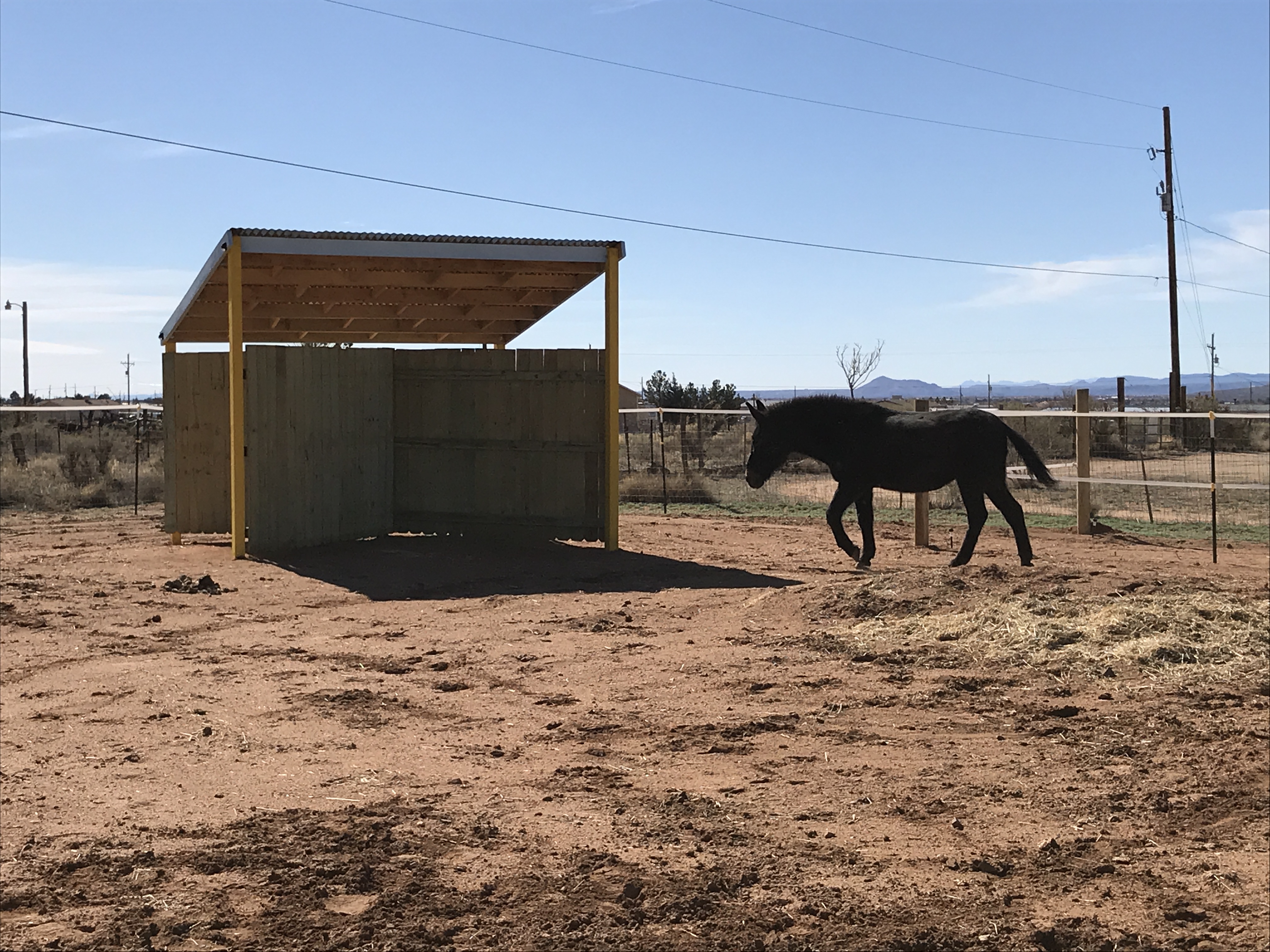
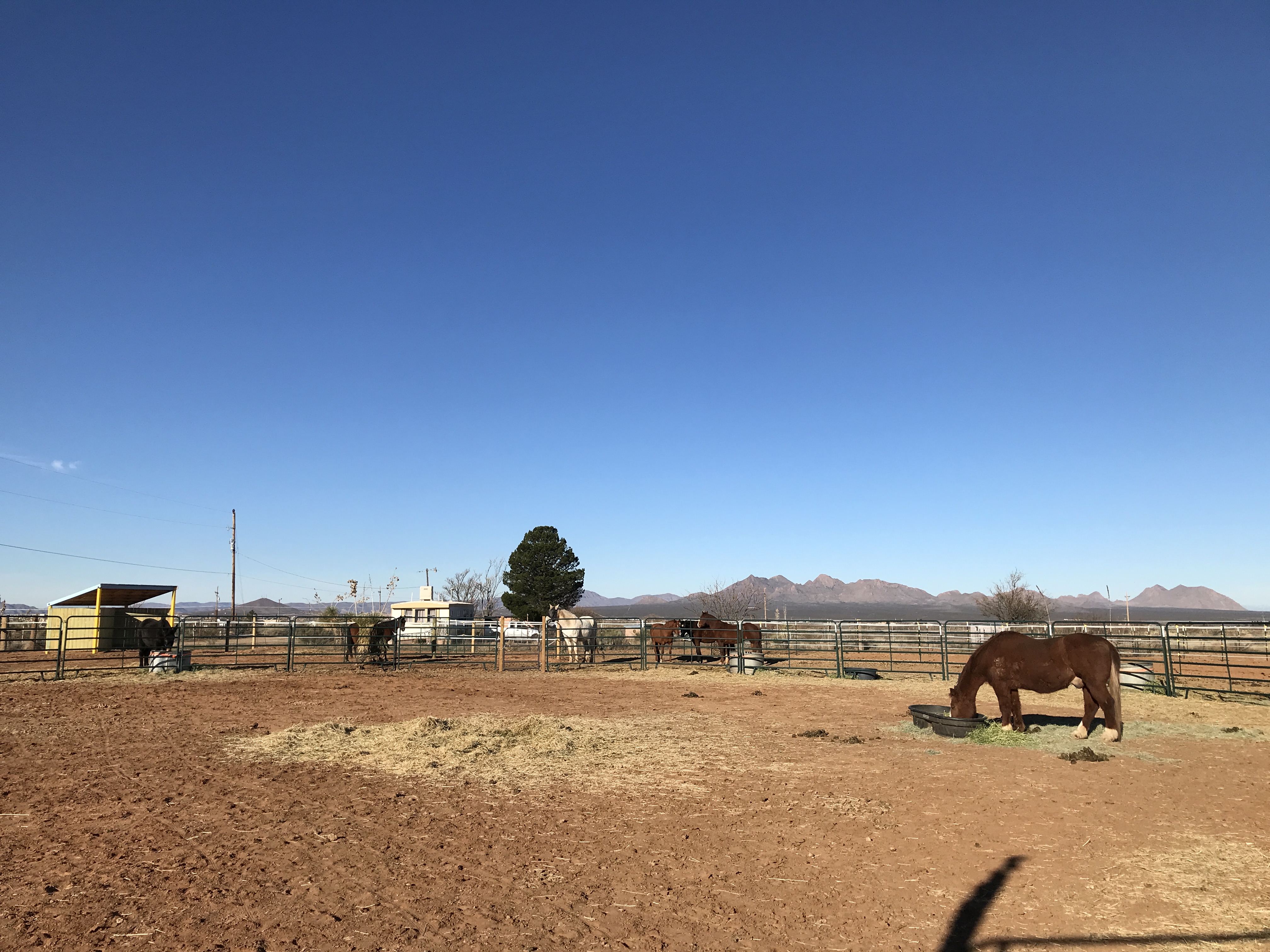
We see our program for horses as one that creates as natural an environment as possible where the horses interact with each other, move about freely, graze upon grass hays in feeding stations and can choose their shelter according to wind and weather. If you take authority over an animal, you take responsibility for their well being. My favorite quote is: “Love is the active promotion of the well being of the love object” – E. Fromm. We love horses.

So, a horse sanctuary is a place where each horse is honored for his/her individual personality with a conscious awareness of the reasons for any quirks or fears. It is a place where equine nature is understood and supported, knowing that horses are herd animals; they are gregarious and need other equines to interact with.

Every horse owner can make their horse’s environment a sanctuary. It is a loving concept that can mean the difference between a mediocre existence of service and an enriched life well lived. A horse who is cherished will look forward to human contact. This horse will give more than is asked of him. There will be light in his eyes and he will be curious, engaged and content.

They say that we can judge a person by the way he treats animals. With horses, we must ask ourselves if they are here to prop up our egos or are they deserving of the same consideration we want for ourselves? When we open our hearts to accept the nature of horses and see through their eyes, we gain empathy for them both as a species and each as an individual. That is when their lives can flourish as we begin to add the simple things that support them and remove the things that torment them.

Sanctuary – a place of refuge or safety.

A horse rescue is also a sanctuary by definition and a horse sanctuary is dedicated to the principles long term. A funny side-effect of Sanctuaries is that the people who participate in the compassionate care of horses are healed, themselves, by the act of caring.

Horses bring out the best in people, given a chance, and when the human opens up to the pure honesty and persuasiveness of equine nature. We are changed by our association with horses. If we have their best interests at heart, we are changed for the better.

Categories: Uncategorized | Leave a comment

What Horses Want in a Human

We all know what we want in a horse, what does a horse want from us? It is an important question when we consider our responsibility for the life of a sentient being, totally dependent upon us.

We need to make their lives interesting, but safe. Enrichment means adding varied terrain, spreading out feeding stations to mimic natural grazing, taking horses out on walks in-hand and riding in groups to add herd like interactions and confidence.

Safety means building proper, visible fences and providing shelter from wind, rain and sun. Horses need companion animals (and equines are the first, best choice). Horses want us to spend time with them and observe their preferences. People do things for “looks” that horses would not want if they could have their say. Facial hair is often shaved to make a nice clean look for competition. Horses need their facial whiskers to act as “feelers” so they don’t bump their eyes in the dark and because they cannot see the ends of their noses, whiskers alert them to where objects are. In parts of Europe it is now illegal to remove whiskers from horses. Leaving tails as long as possible means they have natural fly swatters.

Track systems or large fields let them be in motion and bare hooves keep them in touch with healing earth energies and allow the hoof to be a flexible foundation. Horses want tasty food that is nourishing and available most of each day. So, providing nets full of grass hay (no Sudan, Johnson grass or Fescues) scattered about their premises helps relieve boredom as well as feeding them more naturally.

Horses’ lives can become boring. Imagine living in a box stall 20 hours of each day. Imagine coming out of, what to us would be like living in a closet and being placed in a round pen to be chased about to “let off steam”. Then you’re saddled and bridled and expected to respond to a rider’s whims and wishes before being put away, back in your stall to await the next day and another ride. No wonder horses get all manner of vices and odd behaviors as coping mechanisms.

Imagine if your drinking water sat out day after day, being topped up but never cleaned. The taste would become off-putting and as you drank less, your digestive system would begin to fail. I was taught as a child by a British Horse Society trained instructor who made us drink out of our horses’ buckets. Nothing makes you more aware of and attentive to clean buckets of cold, fresh water than having to drink from it yourself!

Horses need some REM sleep each day/night. In a herd, they will tend to have at least one “guard” who stands while the others lie down. Horses can sleep standing up, but they do not go into the restful REM unless they can get down and feel comfortable. Some manner of soft bedding makes that possible. Sand, peat, shavings, straw or soft earth is needed to encourage real rest.

Horses need access to minerals, especially salt, to stay healthy and at our Sanctuary; we prefer the mineral rich Himalayan salt, tied in different locations for them to savor. When the weather is changing or a horse has hoof issues, we add an ounce daily of the course ground Himalayan salt to their bucket feeds as well.

Tree shade is best shade, but some tree bark and/or leaves are poisonous to horses. The worst are Yews, Red Maples, Black Walnut, China Berry and Cherry. Trees that are healthy for horses, even if they munch on them are Willows and Mulberry trees. If horses could mention it, they would tell us that they love trees.

I lived in a huge pasture with my two geldings for several months. I would walk around with them at dawn as they moved from hills to depressions, finding cool air and warm spots; settling into cover under the Cottonwoods and drinking from tanks where I had floated small pine logs so the bees would not drown. They would lie down in a big sandy wash above the small river and I could lie with them (my older Anglo-Arab serving as a pillow) and sleep safely until time to roam again, grazing on grasses and young plantain. There was a huge Black Walnut tree that they wisely avoided. They also knew when the bees were most active and we wandered to the edge of the pasture to avoid disturbing them.

I want that kind of life for our horses in Sanctuary. We are in the high desert and the pasture is not possible, but the roaming and exploring and herd interaction is something we can provide.

And I can spend time with them. Observing their daily preferences and moods; getting still and quiet with them allows me to understand each of them as an individual. It is a privilege to be with a horse.

What do horses want from us? Consideration, kindness, water, food, shelter and friendship – these are the basic ways we can enrich their lives and support their good health. In turn, we get loyalty, healing, compassion and trust from a being whose ancestors built our civilization. Talk about a Win-Win situation!

Categories: Uncategorized | Leave a comment

Bond with Horses

It’s about listening, honoring and knowing each horse as an individual, and awareness of all horses as a species.

Categories: Uncategorized | Tags: , | Leave a comment

The Victimization of Equines

This is a difficult topic for me. As a survivor of abuse, I find triggers for my own anxiety in the mere thought of any being suffering demoralization, neglect or even worse, violence. Because I run a sanctuary for horses, I see the cost in the emotional, mental and physical bodies of the horses we care for day in, day out.

Yet, the horses (and long ears) find it in themselves to forgive and come around to trusting again. At least, they learn that they can trust us because we work very hard to be trustworthy.

At the sanctuary, we had a mare come in who had to be 30 years old. She was foundered badly and her body was scarred in a unique way. Damaru showed the classic scarring of a victim of “horse tripping” – a violent and deadly form of amusement inflicted upon horses. While we tried as best we could to heal her on all levels, her body just could not repair the damage.

But, Damaru knew love. Great, boundless affection and compassion were wrapped around her every day. She was cherished and she responded in kind; she nuzzled us for treats, she stood calmly for treatments and care and her soul was healed before her body finally gave out.

Damaru arrives at Dharmahorse Equine Sanctuary

Keeping her free of pain became more and more difficult and we finally made the decision to euthanize her (surrounded by those who loved her)… it was the final and ultimate act of love. We were honored to have known her!

While Damaru was with us “after the fact” of her abuse, I watched a horrid scene of victimization that I was powerless to prevent one time when I was leaving a facility where we were preparing for a Horse Trials. I was to be the “cross country steward” that weekend and had been out on the course inspecting the jumps. As I was driving out, I saw a group of men on horseback repetitively roping a young donkey. She was terrified.

My truck windows were down and I could hear the men yelling and laughing – they sounded quite drunk. I was alone except for them at the facility. It was late evening and as I watched the donkey tremble and try to duck away from them, it felt like I was watching a gang rape. If I had tried to intervene, I would likely have been in great danger. I couldn’t call the authorities, what these monsters were doing was perfectly legal, acceptable in the “cowboy” circles…

I cried all the way home and all night. How could humans have so little respect for the precious life they were tormenting? How could I be so impotent in my ability to help her? I decided to try to buy her when I went out the next day. She was gone. So were the cowboys who had abused her. But, in the world of “livestock”, what they were doing was not considered abuse. In my world, it was the definition!

The blatant mishandling and demoralization in those two examples is easy to recognize. What I saw a few months ago is a bit more difficult for some people to understand as abusive. I had gone to an event to watch a trainer’s demonstration and went down to the arena early. This trainer was standing outside the arena with a coming three year old filly all saddled, wearing a halter. He stood beside her with her lead shank looped through a pipe on the fence, standing her just above a patch of green grass. The grass was inches below her muzzle and every time she reached down to take a bite; he hit her in the head with the end of the lead rope. Over and over…

I decided that I couldn’t watch any more. I left. Many people might think that he was “training” her – perhaps “showing her who was boss”. I saw disrespect that was causing confusion and a situation that he (as the one who was supposed to be the thinking part of the team) could have resolved by simply holding her over by the abundant dirt and sand that offered no temptation.

Horses learn that we are either kind and aware or unkind and oblivious.

Horses become victims when the humans responsible for their wellbeing are either deliberately cruel, unconsciously neglectful, blind and deaf to their needs or blatantly self serving. As a species, we can do better. And I live my life trying to be a voice for the voiceless. Let’s all do better.

Categories: Uncategorized | Leave a comment

Theory…

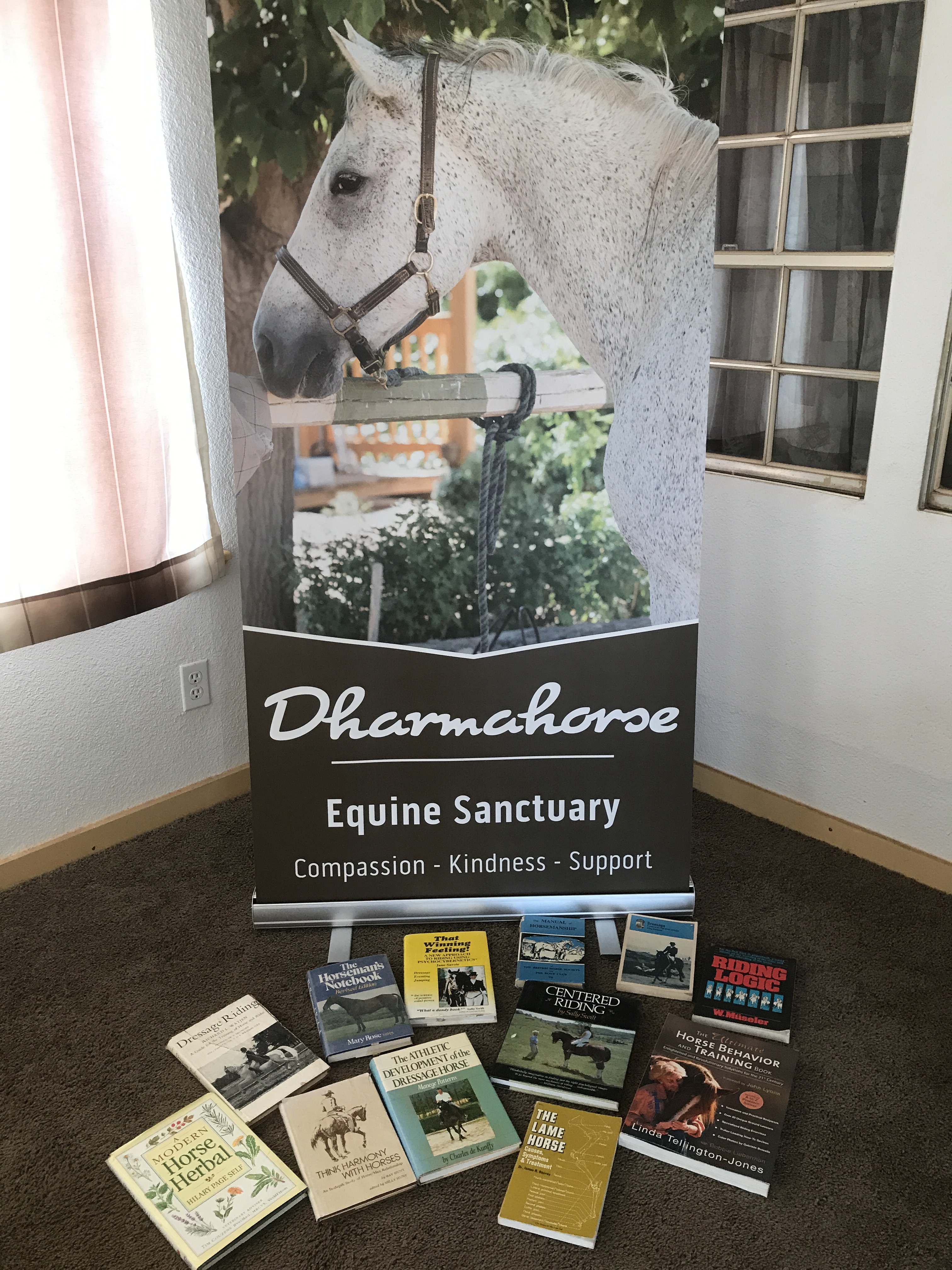
I’ve been thinking a lot about the education of horse handlers and riders. There are so many videos out there with information as “How To” demonstrations… I used to say, “Take 100 horse people, ask them a question and you will get 99 answers because 2 of them might agree”. An exaggeration, I know – BUT, there are multiple methods because all horses are individuals; all people are individuals; horses will always TRY to cooperate with us. The only way to gain experience (the only way to become a horse person) is through “Theory, Direction and Practice”. The best way to learn Theory is through books. Yep. The Masters have documented methods and philosophies in amazing books that deserve study. I put a few important books beside our new banner (I’m loving it!) and Mark took a pic. I return to these (and several other masterpieces) time and time again… I’m old school.
IMG_1163
 
My feelings about the films and videos (and mind you, I am, myself, in 2 valuable, international ones) is that they draw from a different part of our brains – to sit and quietly read a book, dwelling on a potent paragraph or chapter, puts us in a deeper learning space. So much in the standard writings of Masters needs to be “felt” rather than “viewed”.
 
The key to good relationships with horses is clarity and CONSISTENCY. Whatever style or method you choose, you must be consistent in its application and in explaining it to the horse. My deep hope is that you choose a method based upon compassion and kindness. We can choose ideas from many teachings – ultimately it is the horse himself/herself who decides if we are successful.
Categories: Horse Training, protecting horses | Tags: , | 2 Comments

Water is Life

We have been adding to the herd on the track system at Dharmahorse Two. LungTa (the Draft gelding) and 4 mares have become a bonded herd with Joe (28 year old OTTB) needing his own private space and the newest addition, Teaberry, coming out of quarantine. Teaberry went to the central giant round pen four days ago and was integrated into the herd yesterday… he is a gelding, a youngster for DH at age 7! He and Luna hit it off (kids, they’re just kids!). We put Juniper in a side pen so she wouldn’t ramrod the new kiddo at first.

IMG_1029

IMG_1057

Last night, LungTa took Dream Cat (little Arabian mare) to a far corner of the track. This morning he still had her sequestered there. We brought Molly (the world’s greatest mule) and Bodhi over today and they are in the smaller track system by Joe. All was going well… except, LungTa and Dream Cat had not been near the water tubs!

IMG_1047

I couldn’t let them go long without drinking water – no matter what I did, LungTa channeled her back to the far corner. So, we put Teaberry back in the separate pen, Juniper back in the herd and I had to put Dream Cat in the central round pen for tonight where she will have her own water. She drank and drank! Then LungTa came back up the feeding stations / water area and HE drank and drank. Whew!!

What seem like the best of plans can work out differently than expected. Maybe some people would not have noticed that LungTa and Dream Cat were never going down to the waters… maybe an impaction colic (or two) would have been tomorrow’s destiny. But, we juggled things to make everyone as safe as we could. We hope to sleep tonight, we are weary.

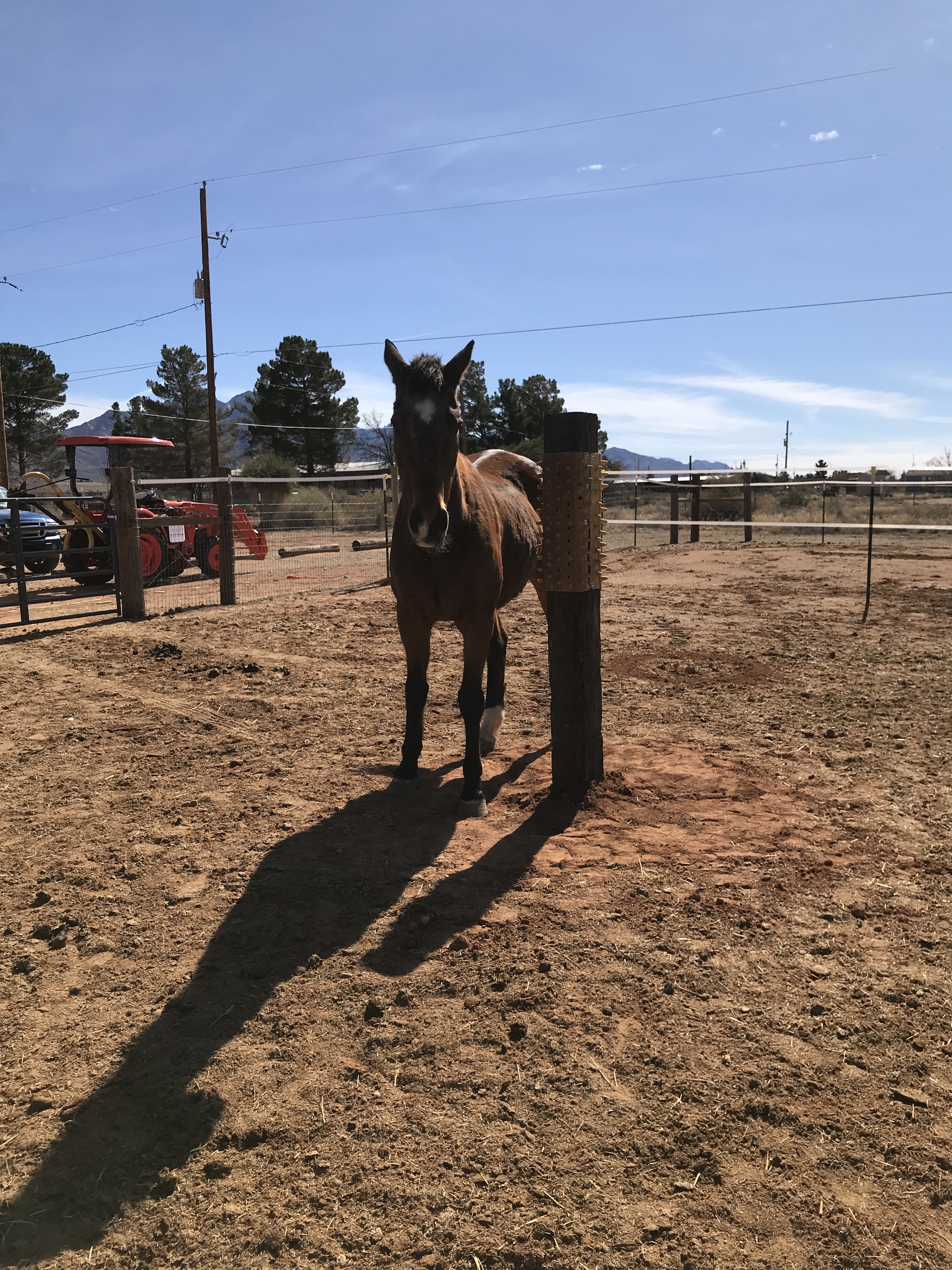
Because we had to change Joe’s pen and now he is fenced off from his beloved Yucca (he scratches himself on it), we put a big railroad tie deep in the ground and attached nobbley scratching pads all around it. Joe loves it! And, no worries, it’s supposed to get warm enough tomorrow for me to soak him in emulsified Jojoba oil and warm water (he has chronic dry skin, I have total empathy).

IMG_1046

Joe is gaining weight slowly. Teaberry is sound, he has been trotting and cantering around all day. Bodhi loves Molly, Molly is liking Bodhi well enough… Clemmy pretty much loves everyone and she is sound enough (she’s very “over in the knees”) to gallop full tilt across the whole yard! We left lights on around the DH2 Yard so no one loses their bearings tonight. Loving horses is all about these things.

IMG_1053

Water is Life. If LungTa and Dream Cat were not going to go to the water tubs, we, the thinking, responsible ones, had to find a solution. There is always a solution. Perhaps I will actually sleep tonight!

Categories: healing, protecting horses, Saving Horses | Tags: , , , , | Leave a comment

Fires at Midnight

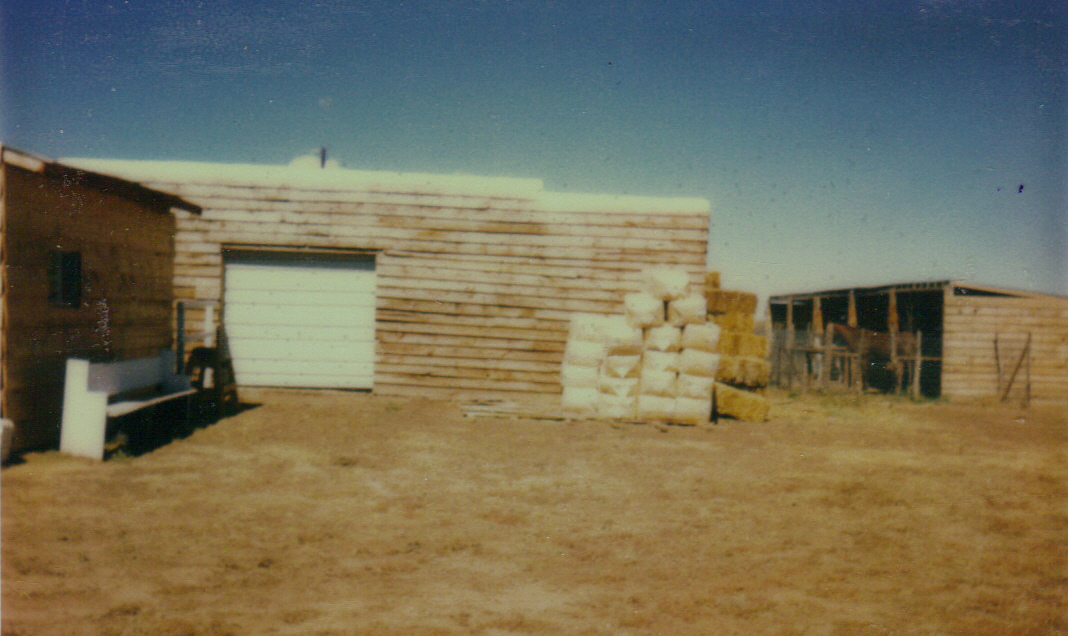
We used to live in Tucumcari, New Mexico. In 1977, my Father broke his back and we discovered that our Newspaper Corporation would have to declare bankruptcy – that was on December 21st. On December 23rd, we were sitting with our Editor at our home south of town. The house had no windows on it’s west side and was entirely glass on the east. As we sat, discussing the fate of our business (with 45 mph winds whipping across the dry, native grasses that surrounded us), my brother and I asked each other several times, “Do you smell smoke?”…

I was looking out the back, toward Tucumcari Mountain when suddenly, the whole world was on fire. The feeling cannot be described. I screamed, we all ran out the front door and the sight was like Hades itself. Flames were leaping over parked vehicles, licking up trees and whirling full speed across the native pasture of our 40 acres right for the huge wooden barn full of shavings and our beloved horses.

8-27-2011 10;42;11 AM

8-27-2011 10;42;08 AM

There was a mare with her foal, two young stallions, more mares and many geldings, a small pony and a half Draft horse. They were trapped and all I could think was, “RUN”. And I did. All I can figure is that I can run at over 45 mph because I beat the flames to the barn. I threw open the garage door at the south end and began opening stall doors frantically. Each horse trotted (some galloped) out of their stall and out onto the 40 acres. The blessing was that I had always just opened stall doors to let them out onto the (now dry) pasture and they simply ran on out from habit.

When they all had gone out, I slammed the end door shut and ran, gasping, to the well house. I opened all the taps and started hosing down the building as my brother and my Mum caught up with me. The horses were confused but not panicked. They gathered in little groups on bare patches of land and the fires rolled around them, the air full of red and black smoke.

We could not see past 20 meters into the smoke and the heat was overwhelming. I pulled my shirt off and wrapped it around my face to breathe through it. Crying, praying, cursing and trying to breathe, I watched embers landing on the roof of the giant barn. What saved the barn, besides the flood of water we were pouring all over it, was the thick coating my Mum had had applied to the (leaking) roof the previous summer. It was, in retrospect, not flammable!

I remember vomiting twice, coughing up blood later, and my eyes swelling almost shut as we suddenly thought about our house! I stayed with the horses. My Mum and brother ran back to the house – it was dark like evening time (at mid-afternoon). I later heard the story of how my Grandmother, Mum and Brother and our Editor used hoses until the home well ran dry, then used buckets to throw water from the swimming pool onto the trees, bushes, under cars and onto the roof of the house. It was surreal.

As I collapsed in the dirt by the barn, too dry to cry anymore, through the smoke, I saw the flashing lights of fire trucks racing across the fields – they just rammed through the wire fences, sirens screaming, and screeched up to the barn to douse it with water then head to our neighbor’s house. More arrived, as the fire burned out on our land, and began soaking the huge manure pile (far enough from the barn) that was now smoldering. Embers were flying everywhere.

I realized that the horses were now loose and most of the fences were down… but they stayed clustered on familiar land and were unnaturally calm. In shock, I suppose, I knew I was.

We later found out that an RV caught fire and kept driving, setting fire to 3 counties of dry grass and brush. The incident made the national news where they said no homes nor humans were threatened – many of us were enraged by that statement!

As things settled and the fully soaked, sopping wet barn seemed safe, I began catching the horses and putting them into their stalls. It was night, the electricity was off, it was getting cold and I was exhausted. The family gathered to assess the situation. We decided that I would sleep in a car driven down and parked beside the barn. Dotted all across the countryside were glowing, smoldering cedar fence posts that looked like thousands of campfires in the distance. And the huge, composted manure pile glowed like a flying saucer. It was terrifying. Over the next few weeks, road equipment kept coming out to grade through that pile and fire trucks came to soak it, over and over. Manure is amazing fuel.

I spent each night in that car for a week and we spent the days repairing fences so we could turn horses out again. Every now and then, at night, I would see a distant Mesquite tree or Chaparral blaze up and burn out over several hours. Late nights were when I could see the extent of the lingering fires… Day time was when the charcoal encrusted vistas showed the damage. My brother and I walked the land with shovels, putting out every smoking discovery, hoping to see less fires the next night.

I have faced other wildfires through the decades, some bigger even, some hotter, some in forests – nothing ever felt so overwhelming as the one in Tucumcari when I realized that all of my horses were standing, trusting, in my wooden barn, bedded in dry wood shavings with that raging fire heading full speed straight for them. Even now, if I smell smoke, my fight or flight response kicks in.

Categories: Uncategorized | Leave a comment

These Hands

I used to be embarrassed by my arm. After falling through the window and having my hand reattached (severed tendons, nerves, arteries and veins), I have always worn long sleeved shirts. The scars are nothing, really, now – compared to how they looked for those first few years… like an arm sliced up to use in a sandwich.

My hands worked so hard all my life. Decades of struggle; loading and unloading hay, holding onto spooking colts, keeping stallions under control, running printing presses, riding Harley’s, cleaning out needle valves on the carburetor of my Dodge PowerWagon, planting gardens, scrubbing Operating rooms, changing tires, dyeing clothing, kneading bread dough….. the things horsewomen do and healers do… catching my granddaughter at her birth, holding my Mum’s hand as she passed over, holding disabled children on patient old horses…

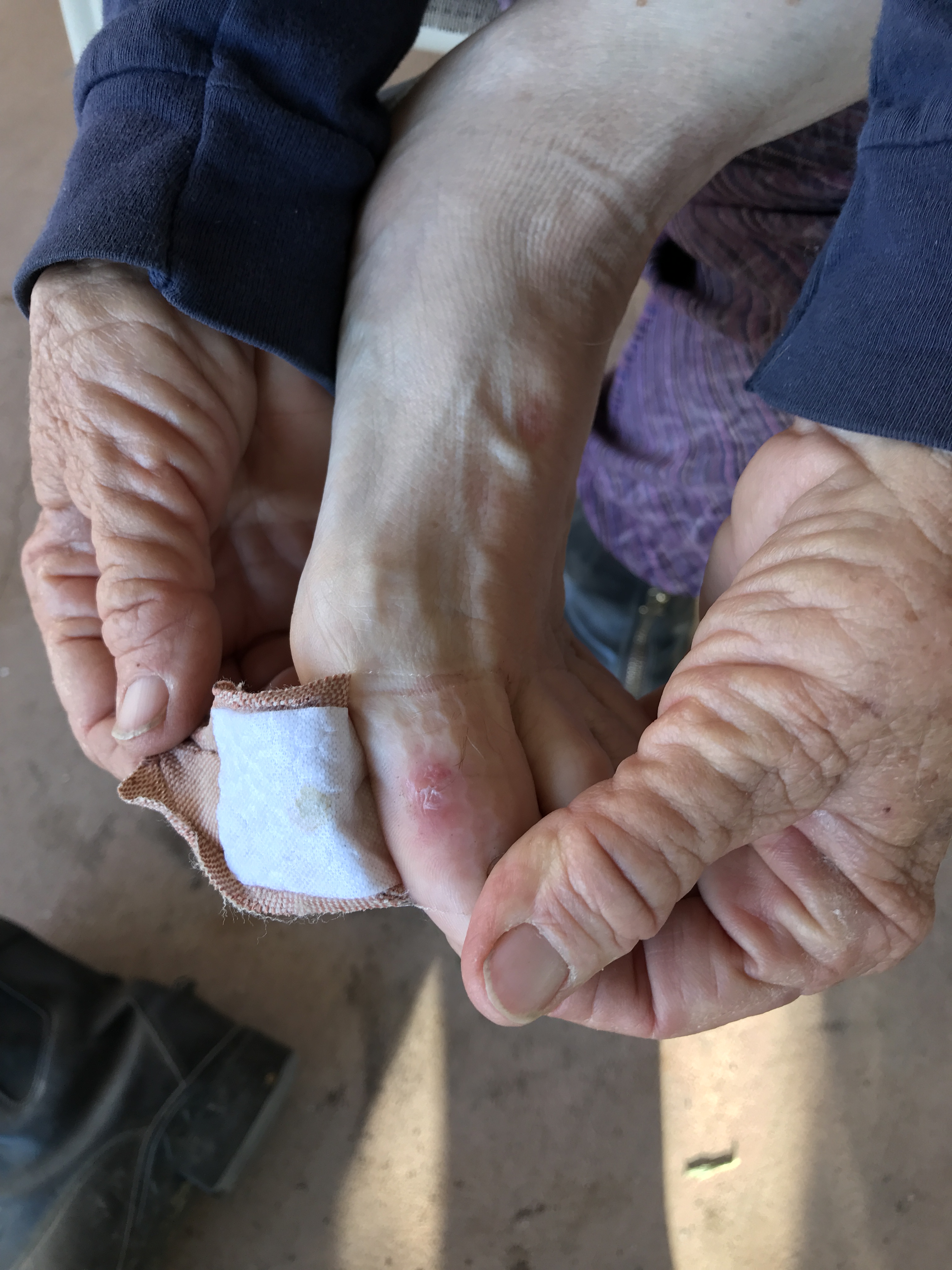
My hands have been useful. And they have seemed so ugly to me. I had Mark take a photo of the sore my new shoe created on my toe (it should not have happened, there is a nasty seam in one shoe). I saw my hands. I cried. How could they get so battered… so OLD? I’m only 63 years old; they look like a hundred.

IMG_6438

Then I thought about all they do and have done. In spite of a near crippling injury and being stepped upon by a horse; being exposed to countless hours in water and being soaked in cleansers… they are so resilient, considering. Years of wearing gloves and not wearing gloves. They have been useful.

I searched for the photo from our wedding, of Mark and me with our rings. I found it. I had turned my hand over because the palm is less abused looking. And I thought about how he, Mark, beloved friend and husband “took” that hand that day. He put a beautiful ring on a funky old finger and never has he seen these hands as ugly.

SONY DSC

Tonight I watch them struggle to type, one letter at a time… they serve me well. They succeed even when they ache to the bone. They are precious. They may drop silverware in public and let glasses slip to the floor… let go of the longe line, drop the wand, cramp up and let go of the hay twine, but then, after, they pick things up again.

Categories: Uncategorized | Leave a comment

Blog at WordPress.com.