As the weather and the light change approaching winter, we have to shift routines and supplementation here at Dharmahorse Equine Sanctuary. With horses from different backgrounds (some with health issues, some as old as 36 and young as 1 year), we tailor our programs for each individual.
Our herbal health protocols for winter here are designed around specific herbs to maintain health and prevent disorders. Of course, this information is never meant to replace a health care practitioner.
ANISE seed, Pimpinella anise, is an herb we use to prevent and in treatment of colic in horses. It is also great for coughs and lung disorders. We add the powdered herb to a bucket feed using a tablespoon once daily as prevention for horses prone to colic. When a horse is starting to look distressed, we feed a quarter cup of the ground seed in a very wet wheat bran mash with an ounce of milk of magnesia.
We feed it similarly for lung disorders, usually with large amounts of Yarrow tea either dosed carefully into the mouth (keep head low to avoid aspiration into the lungs!) or used to soak the mash.
CALENDULA,Calendula officinalis, blossoms are fed to horses to support skin health and healing. I’ve fed it to mare and used homeopathic calendulated oil topically to heal her severe rainrot. It is high in vitamin C, vitamin A and phosphorus. Calendula ointment made with blossoms infused into olive oil and stabilized with bees wax is used to dress wounds, burns, rashes and chapping.
We have used calendula tincture on bruises and strains. It has some good anti-inflammatory properties used externally as well as fed in the bucket feed. I feed one or two big handfuls of the dry blossoms daily. The oil is a good treatment for mud fever / scratches, rainrot, rope burns, eczema and contusions.
CINNAMON, Cinnamomun zeylanicum, is an evergreen tree whose dried inner bark is used as a culinary herb / spice and as a medicinal herb for people, horses and dogs. The scent itself has immune boosting, antiseptic and anti-nausea properties.
Horses with conditions like Cushing’s Syndrome can be helped with the addition of half ground Cinnamon, half ground Fenugreek seeds to the ration – about 2 tablespoons daily. Horses prone to gassiness or flatulent colic can be aided by a half Cinnamon, half Fennel seed mixture fed daily 1 to 2 teaspoons.
ECHINACEA, Echinacea Augustifolia / Echinacea purpurea, is an effective remedy for bacterial and viral infections. It “boosts” the immune system and therefore is contraindicated for any being with auto-immune diseases. The root and leaves are both used. We tend to use the root for treatments; the leaves for prevention. It contains vitamins and minerals (ZINC, iron, manganese, selenium and silicon) and “undiscovered properties” that make it a premier herb for all infections – from tooth/gum infections to lung disorders to hoof abscesses – added to the bucket feed. We feed a handful of the dried leaves daily to a horse for at least 21 days or a heaping tablespoon of root in the feed for at least 14 days.
FLAXSEEDS, Linium usitatissimum, are a nourishing herb that is used for humans, horses, dogs, cats, cattle, llamas, you name it! The seeds contain 40% fixed oil, linoleic, linolenic and oleic acids, mucilage, protein and linamarin. The oil (edible, coldpressed flaxseed oil) is used as a daily supplement to strengthen and heal the lungs, heart, digestive tract, skin and mucus membranes. The seeds can be cooked into “linseed / flaxseed jelly” to be fed to horses (the raw seeds can colic a horse – they release gases) or ground into a meal.
Flaxseed Jelly: For each horse use one handful of seeds and 2 quarts of water. Soak the seeds overnight (for 8 hours). Then bring to a boil, watching constantly! If this mixture boils over, and it tends to, it will make a gooey mess. Use a non-metal or enameled pot and wooden spoon. Stir often. Boil for a full hour. You will have reduced the water considerably and have a thick jelly to add directly to a bran mash or hard feed of grain or pellets. Do not strain it (you can’t!). Just mix it well into the bucket feed and offer it 2 to 3 times a week in winter.
MILK THISTLE, Carduus marianus, seeds are the supreme liver support and healing herb. We add 2 tablespoons of dried seeds to the bucket feed once daily for a horse with liver stress.
I have seen milk thistle cleanse the damaged liver of a gelding in his 20’s who had been dosed repeatedly with Ivermectin wormer until he jaundiced (mucous membranes turned yellow).
ROSE HIPS,Rosa species, are rich in vitamin C, A Rutin, selenium, manganese and B Complex vitamins. Rose hips can be fed whole or ground to horses in a bucket feed for stress, coughs, inflammation, infections and to support hoof health.
WHITE WILLOW BARK, Salix alba, is “Nature’s Aspirin”. The bark contains Salicin and Tannin. White Willow is actually used to heal digestive tractdebilities, so it is not an ulcer inducing compound like regular aspirin is (which is synthesized from the medium of the bark). It can be used for pain and inflammation relief for people, horses and dogs but never for cats. Just as aspirin tablets can be deadly for the feline; white willow bark’s salicin is contraindicated!
The pain of loss, the pain of betrayal… even the physical pain of torn muscles or stepped-on toes, time brings a lessening of the sharpness, an easing of the ache.
I’ve been dreaming about horses, dogs and people we have lost this past year. That pain takes a real chunk of time to alleviate the suffering. I don’t think it actually ever goes away, we just have to continue on with the care of others and stay focused on the now to remain functioning human beings.
Our facebook fiasco has brought clarity on how we want to move forward on that platform. I’ve heard everything from “We thought you had shut down”, to “I don’t see Katharine begging for money anymore”, and it has lent an awareness about who we want to connect with in the future. Time to ponder the energies of the past and which energies we need to draw to us in the future is a kind of a gift.
One remarkable thing happening right now is an influx of donations (funds, feed and support) to the horses that has us mindful and grateful. That’s an amazing place to be. Just when the experiences of the near past feel overwhelming in a harsh or wicked way, we have been overwhelmed by kindness and compassion. I think I feel much the way these horses feel when they come here, into sanctuary. They may have felt “beat up”, confused, sad or defeated… then, great love rolls over them. They can breathe. They are safe. They know that someone genuinely cares about them.
My brother and I have been a part of a program (No Barriers), for special needs people and their caregivers (I am his caregiver). In that model, there is a concept of a “rope team”. I even climbed a high wall at a retreat (I am afraid of heights) with a Rope Team and it was life changing. The realization, today, that Dharmahorse has a powerful Rope Team of individuals and organizations who realize what we do and who we are, and care that we continue, is more healing than time.
There will always be glitches, there will always be sad days. There will also always be days full of wonder and days full of joy. I can choose to reflect on all of the good things happening and hold in my heart the pure, dynamic spirit of caregiving. I can know, really know, that we make a difference in so many lives. That is an amazing reason to wake up every morning and power on!
Sitting under the now leafless trees with a hot cuppa tea this morning… I’m reflecting on the past few days. It’s Wednesday. On Friday, LungTa went downhill. He was lethargic that morning. His anorexia had left him thin and not well hydrated. I was doing everything I could to get nutrients in him by dose syringing oils and vitamins into his mouth… magnesium and colloidal silver, all the things I had been doing for three full months with soaked feeds, dry feeds, all kinds of hay and a water bar, keeping him alive while hoping his kidneys would heal.
The day before, he had been perky. He visited with his herd through the fence of the round yard. He looked for grass to munch that had now all died back. He drank water and even almost trotted back to his stall in the Infirmary. I was not expecting what happened at noon.
Our surveillance cameras caught it. All I saw from the house was him lying down… I had gone inside to have lunch. He had not laid down for months and I knew he was sleep deprived – for a moment I thought it was a good thing, he was resting. But my rational mind realized it was not good. I called Mark and ran to the barn. LungTa could not get up.
Our friend Sarah came and the three of us tried to help him up with ropes around his haunches. We quickly learned that he had no strength. Inside the stall and under him in the pen was copious, thick urine with tiny crystal-like stones… he was passing them. He was in pain. I gave him pain killers. It was the day after Thanksgiving, no Veterinarians were available. There was no way to transport him to a hospital if he could not stand. I settled in to keep him drugged until we could find someone to euthanize him.
We found the video of how he had collapsed… probably as the first stones hit as they passed. Watching it once was enough. All I could do was cry and wish that I had let him go sooner. Hindsight… it’s always a bitch. Yet, he had been improving. A “crystal ball” would have been handy.
So, I sat with him. We put hay bales behind him for support. We took down fence panels to give him (and me) more room. We covered him with blankets (he was wearing a good one, it’s been so cold these days). I gave him tranquilizers. Being “sedated” seemed a good thing for him. I kept stacking his painkillers. He needed to be oblivious. As night fell, I started fluids subcutaneously – I could not find a vein at that point. We piled padding under his head. Mark set up a camera directly over him.
At midnight, LungTa died. It seemed peaceful enough. Like going deeply to sleep. After three months of literally living beside him, day and night, I felt so empty. He was probably around 26 years old… he spent the last 6+ years with us in sanctuary. He had been bound for slaughter. With us, he had known joy living in the herd. With us, he knew pure love. He had scars on his eyes and at some point, in his past, his jaw had been broken. Here, we cared for all his needs. And I felt so empty… he was gone.
Saturday morning, we had him buried. I placed an Amethyst crystal with him. The herd stood around all day and night, in reverence.
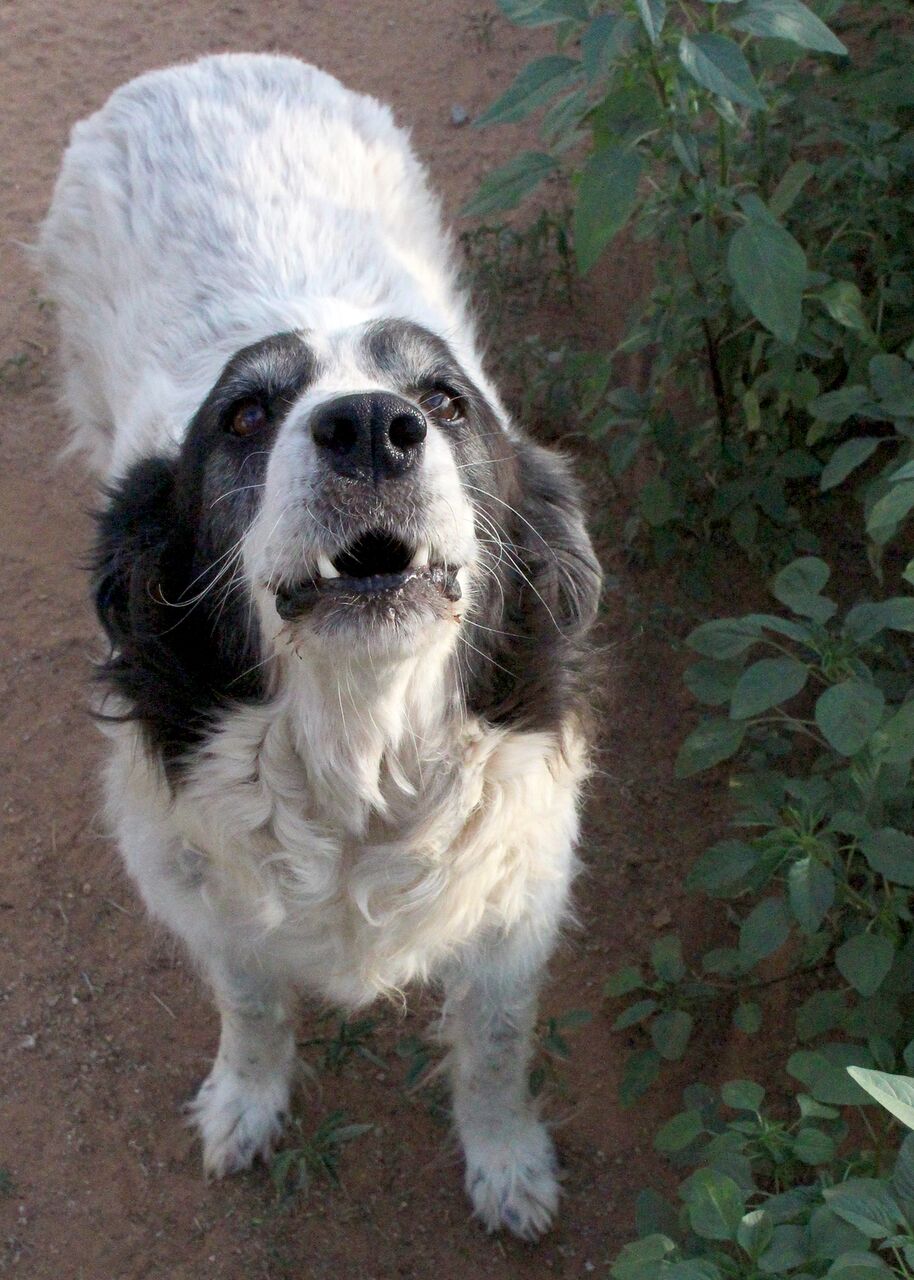
On Monday morning, Phoebe, our beloved very old Great Pyr dog appeared to have had a stroke. It turned out that she had a vestibular disease (of the inner ear and brain) but trying to treat it would only have delayed the inevitable. At over 15 years old, she had had a good life, full of love and joy. Her hips were failing, and we had the mobile Vet euthanize her. It was peaceful, Phoebe was ready. The lovely Vet and her Tech helped us bury her. I put a crystal heart with her.
As I sip my tea and contemplate this life with very old animals, I have come to the conclusion it is an honor, not a burden. The certainty is that we will be losing them. At some point, their quality of life diminishes, and the ultimate kindness is to let them go. Sometimes we have no warning, sometimes it becomes a slow realization… we would never give up knowing them to avoid the pain of losing them. Sometimes, I feel like a midwife to the next life. What an honor that actually is.
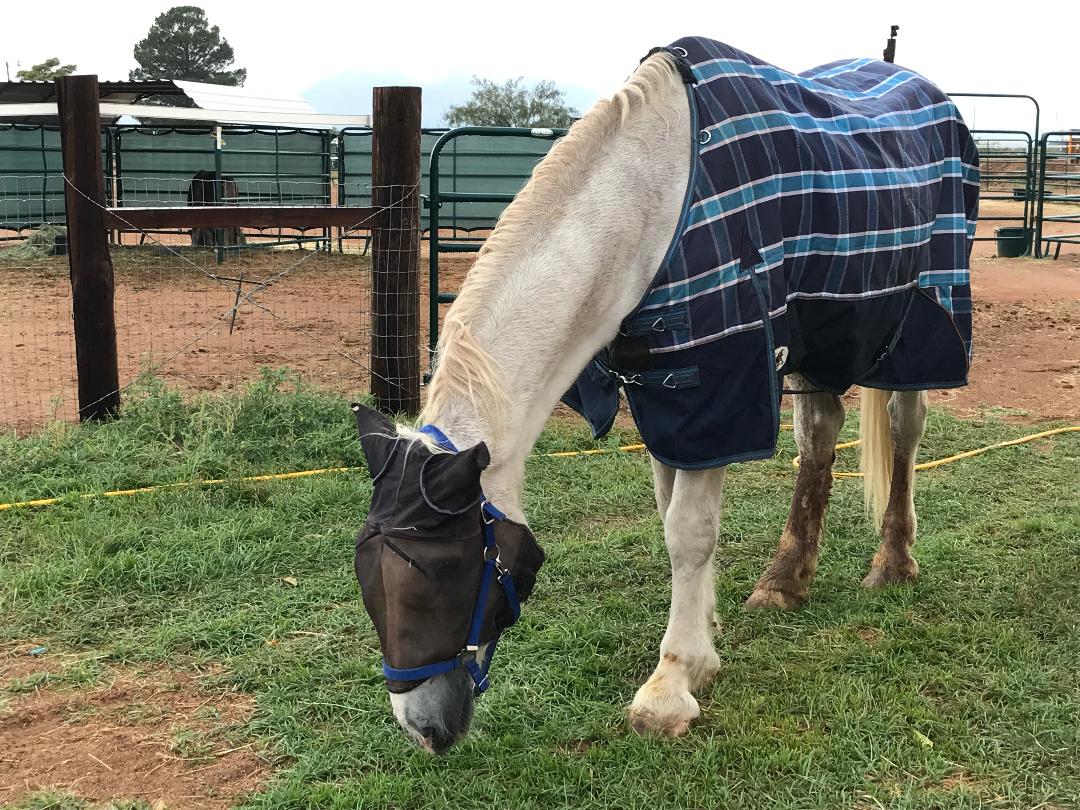
We’re feeling grateful that we added blankets to some of the horses we usually leave “naked” – it all depends upon their age, whether or not they grow much winter coat and if they are special needs…
I woke to the mountain shrouded in clouds and the air full of mist. Cold mist. We fed extra hay last night. They had bran/herb mashes yesterday. Our Thanksgiving was warm and cheerful with fake turkey, wine and pumpkin pie. It is really starting to feel like winter, even though we have another month to go before it’s official.
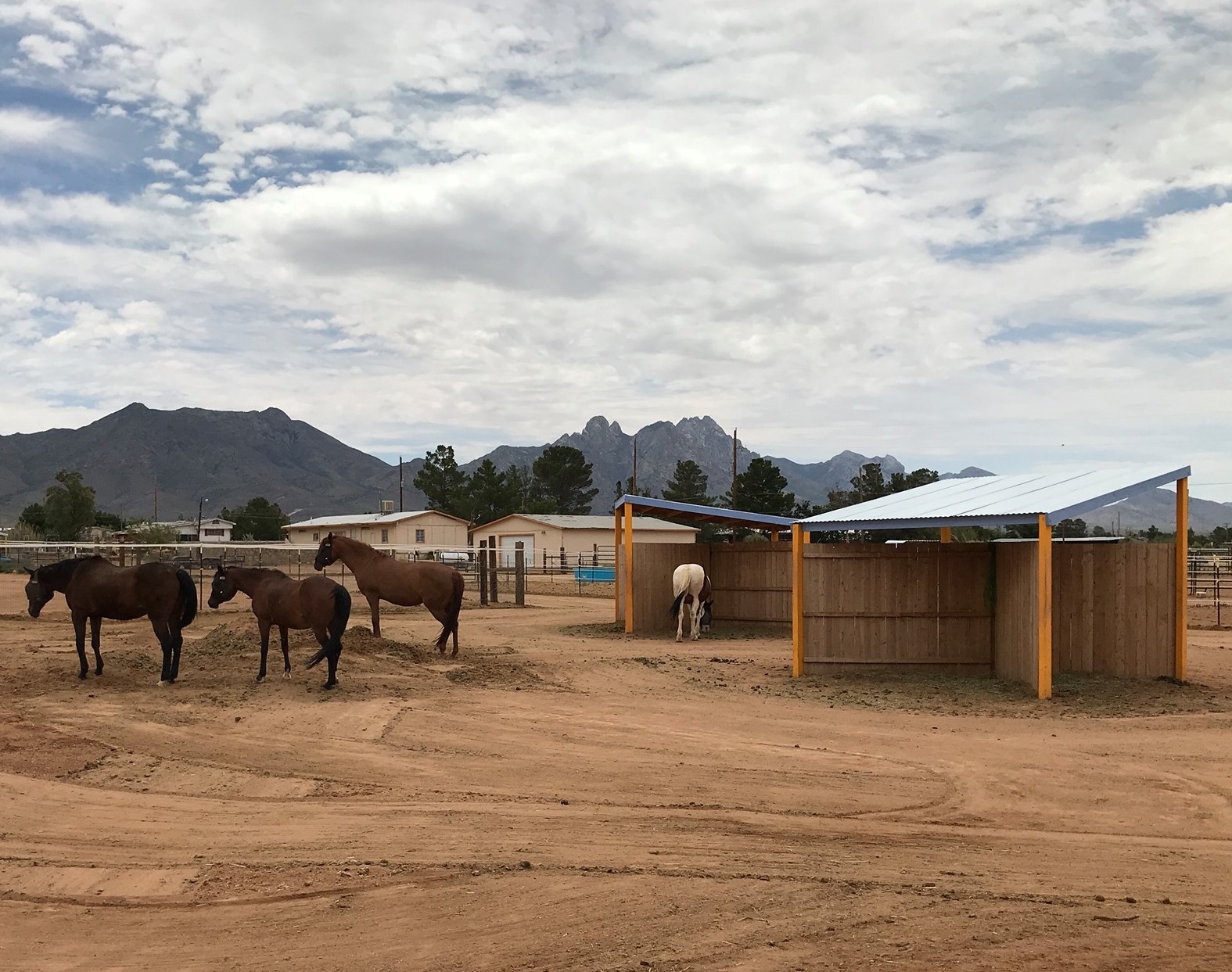
The high desert can have weather swings several times in one day. We are always “on alert” with this large herd of varied ages, body condition and compromised health. It’s never easy, but it is always gratifying. It is always worth it. They matter.
I think about the elders (horses, dogs and humans) that I care for… when I blanket 30 year old Gita, I cry, thinking about how someone dumped her, blind and starving in the desert. I wonder if she thinks about it, too, now that she is plump, warm, with her own stall and safe pen and unlimited love. I hope she only dwells on the present. On comfort. On love.
I would likely be a more centered person if I could let go of the knowing of cruel acts and dire situations these animals faced. But I would probably not have as much compassion without knowing these things… Today is a quiet, damp day with the opportunity for introspection. I will use it wisely.
This morning, Murray, our Appaloosa with Navicular syndrome on both front hooves and a rotated coffin bone on a hind, galloped past me, bucking as I fed! To see that has started my morning off in a very positive way.
Horses are comforted by familiarity. Just as a human can return to a brutal relationship because it is what they know; horses can find solace in strange situations for the same reasons.
If you buy a new equine, find out all you can about that horse’s care, training, feeding and preferences. You might be planning to greatly improve aspects of his or her life, but to change things suddenly (even for the better) can be alarming to the horse. Try to maintain some of the familiar routines, especially what has been fed, and make changes gradually for the good health physically and mentally of your horse. They say it takes at least ten days for the horse’s digestive system to adjust to a new item in his or her feed. You want to add the new food in a small amount the first day then slowly add more of it while reducing the familiar feed until the complete change is made. This is especially important when going from dry feed like hay to the richer pasture.
If you plan to dramatically change the style in which your new horse is ridden, spend a few days with the type of equipment he or she has been used to so that your communication makes sense. Then you can change one aspect at a time to allow adjustments in the horse’s perceptions, understanding and how it all feels physically. Do a little bit often. Sometimes working with the horse 3 times a day for 15 minutes does more good for the adjustment period than one 45 minute session.
Think about the type of facility this horse has been used to – if he has never touched an electric fence wire, he may become panicked when he is first shocked on your electric fence! Think about the visibility of your fences. The smaller a fenced area is for a horse, the sturdier the fences and gates must be. The larger the fenced area, the more visible they must be. Tie white rags on fences to make them more visible.
If you want your new horse to become comfortable in his new home, establish a routine that you can maintain and soon, your methods will be the familiar ones that bring confidence and calm to his life. You do not have to have strict, unyielding times for meals, times to ride, turn out times. You do need to maintain consistency in the way you warm up, ride and cool down. You need consistency in the number of meals per day and should keep them within an hour or two of a regular time. I recommend doing turn outs in the day time during winter and the night time during summer if it is safe and convenient to do so.
Keep your horse’s perspective in mind and you can build a great relationship.
My Mum called the swirling, unpredictable winds we get here in New Mexico “spirit winds”. I sat in the front of the stable yard this morning with my coffee, watching the turbine vents on the hay barn – there are four of them and only one, then two would spin. Then a different one would spin. I thought about my Mum and found it fascinating to watch.
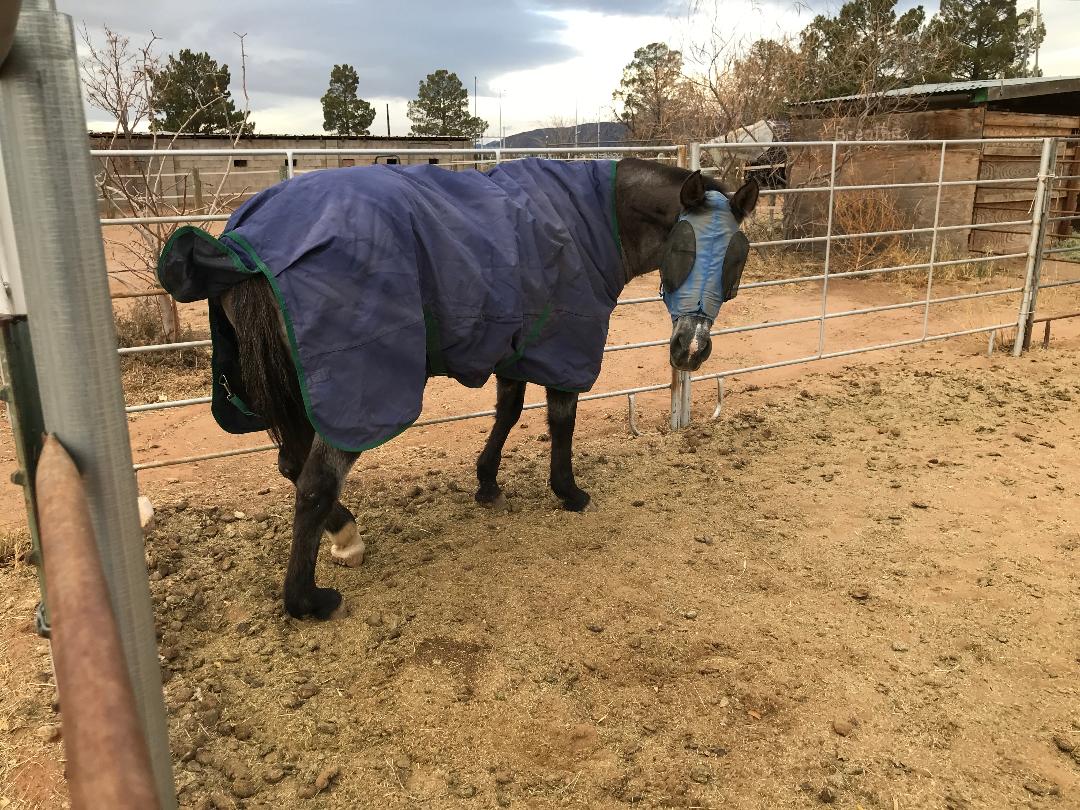
It started out cold this morning, in the 20’s in this high desert. We had winterized faucets and hoses and blanketed the most elderly (and truly “naked” horses who don’t grow winter coats, like Sage). I’m waiting for the sun to burn off the clouds before I pull their blankets.
We dress in layers here. Midday can turn quite warm. One must stay aware for the horses’ sakes and not leave blankets on as it warms up. But a frosty wind or some precipitation can chill the elders and special needs horses to the bone! It’s a balancing act, come winter.
Comet and Murray were full of themselves this morning! Both trotting to their hay and trying little “bucks” in the freezing air as I fed. I can never guess who will love or who will hate a frozen morning. Personally, I don’t mind… if there’s no wind!
I’m not a huge fan of being online. I would rather spend all of my time in direct contact with the horses! But, a good website is essential, this blog is a way to communicate and social media has been an important way to get the Sanctuary out in the “public eye”, until October 31st. That’s when we got hacked on Facebook. It happens. I know that it can happen. I realize that I had my part in making it possible.
That being said, the fact that contacting Facebook is an impossibility made a sad situation into a dire one! The hackers got my personal FB account restricted, then took over the Dharmahorse page. Fortunately, I was quick to freeze our bank accounts. I spent days and nights mitigating the damage as best I could with no help at all from Facebook. The Sanctuary’s funds and the horses themselves were in no danger – but my own peace of mind was shattered briefly.
As I near the time that the Dharmahorse FB page will permanently delete (then I can delete my personal page – I’m the administrator of the DH page) and delete the Instagram account, I will be able to start over. Why would I do that? Social media is a useful tool for connecting with fans of the Sanctuary. I’ll be back without a business page connected to a bank account! I’ll post the goings on and update about the different horses just like before – but with a better secured account and new personal information that will not tie into the old accounts. It’s a wild world out there!
The time has been spent wisely. Moving to a new bank, consulting others (wiser than me) and rethinking what needs to be “out there” has been a fresh start. The new Facebook page will be on the website when the dust settles.
That first week, I was adamant that I would never have another social media page. All I wanted was to be rid of the torment that rained down on my head. As time has passed. many friends have told me how much they miss the connection. So, with a very deep breath, I will navigate the questionable waters with hard gained insight.
I will do anything for these horses. And, it does appear, the horses’ stories need to be out there and accessible. I’ll pull up my big girl panties and try again. See you “out there”.
The mature horse over 16 years of age will be a bit more sensitive to some aspects of care and have a metabolism in need of support through long term, gentle strengthening. Some of the simple herbs that I use for the care and healing of specific systems with a high margin of safety can be added to mashes (see Mashes below):
SKIN – use CALENDULA, internally as an infusion or just added (dry blossoms) to food, externally as an ointment, cream, wash (strong infusion) or a powder (crush dry flowers and put on weeping wounds/irritations).
LIVER – use DANDELION, the fresh leaves eaten as a treat, the dry leaves added to food or brewed as a tea/infusion, the root simmered as a decoction for ingestion, or a tincture or extract of both leaf and root taken in small doses.
HEART – use HAWTHORN BERRY, a tablespoon of the powder added to the daily food. I know a horse with a murmur whose heart sounds improved after 4 months on hawthorn berry.
LUNGS – use ANISE SEED ground, this powder is wonderful for the lungs (also digestion!) and can be made into a paste with honey that is feed very slowly in small amounts. The powder can be added to small meals and moistened.
KIDNEY/BLADDER – use PARSLEY, leaf and root. Feed the fresh leaf chopped into meals. The root can make a decoction that is dosed slowly between meals.
GLANDS – use SEAWEEDS, kelp especially, a half teaspoon daily to stabilize and nourish glandular systems.
STOMACH – PEPPERMINT, fresh or dried in a mash;
SPEARMINT for sensitive, very aged or possibly pregnant ones;
BOWELS – use FENNEL, for bloating, gassy conditions and uncomfortable bowel area, use fennel seeds in food (horses get a tablespoonful to start, reducing to a teaspoon over time).
JOINTS – use YUCCA ROOT, fed in the above amounts as for Hawthorn and – externally – make a strong COMFREY brew to bathe sore joints (use root decoction or leaf infusion) or make an infused oil to rub into the joints.
Drinking water is the most important nutrient your horse ingests. It must be fresh, clean and always available. Water is essential for dissolving nutrients and it reacts with chemical compounds, breaking down complex food substances. Combined with water, they are then able to be absorbed and used by the body.
Water is used for body temperature control.
Water is a major constituent of the natural foods a horse is designed to eat – GRASSES.
Horses are non-ruminant, herbivore browsers who will also eat roots (often very moist) and leaves/bark. The lack of moisture in many of the foods we present to our horses requires free choice access to water to allow proper digestion.
A horse on pasture will drink less than a horse being fed hay because his requirement is lower.
Dampened or even soaked hay can help prevent impaction colic in horses who may choose to drink too little water. This can be caused by ice on water sources, very cold water, warm or algae filled water or contaminated sources.
Feeding water-soaked Mashes brings more moisture into the horse’s digestive tract which prevents impactions/colic and helps to disperse nutrients (especially minerals) throughout the meal.
Mashes can be fed warm (almost hot, test with your hand deeply into the mixture) in the winter and to the infirm; or cool during the summer.
Prepare a mash with up to 2 quarts of any combination of the following bases:
Wheat Bran (adds fiber & phosphorus)
Alfalfa Pellets (high calcium & vitamin A)
Grass Hay Pellets (minerals & flavor)
Add up to one third cup of supplements as needed:
Flaxseed/Linseed Meal (protein, fatty acids, laxative, helps with sand)
Whole or Ground Herbs (specific properties that are needed)
Apple Cider Vinegar (detoxifying and helps with bony enlargements)
Milk of Magnesia (magnesium for lungs, muscles and digestion, laxative)
You can brew an herbal tea for the liquid or use pure water mixed well into the mash to make it quite wet, but not sloppy. The hot mash will become well soaked in around 15 minutes (cover the bucket of ingredients as it “soaks” to retain steam) and a cool mash with pellets may take 4 to 6 hours / a cool bran mash, 15 to 30 minutes to blend properly.
Fomentations are large towels soaked in hot water; often with the addition of herbal infusions for specific treatments.
It is the penetrating heat from the wet towel that causes extra circulation. This movement of blood helps to carry away the fluids of edema, toxins within tissues from injury or disease and relaxes the muscle fibers.
Boil water and keep it in an insulated container to maintain the heat. Because you will wring out the soaked towel with your hands, scalding of the horse is prevented (you can tell how hot it is by your touch – be cautious, for your sake, too).
You can add Epsom salts for drawing properties and the magnesium in them relaxes muscles.
Calming and healing herbs can be added as the water is boiled, then strained out before the water is used.
Soak the towel in the liquid, wring out to just wet, not dripping. Apply to the horse’s body where needed (especially for chronic, old injuries and deep soreness – acute conditions respond to cold). As the towel cools, soak it again and repeat until the water is no longer hot.
A “Crock Pot” slow cooker can be used to keep herbal infusions warm for use; to keep big, smooth stones warm for application to the body (this will increase circulation at a very specific point – like an old adhesion from an injury) and to keep salts in suspension for a soak (Epsom salts, sea salts or Himalayan crystal salt).
Make herbal infusions in a non-metal pot of pure water just off the boil. Turn off the burner, add one half to one cup of herbs per gallon of water, cover and let steep for 30 minutes. This is the method for soft/fragile plant parts like leaf/bloom.
Make herbal decoctions with the same amount of herbs to pure water in a non-metal pot. This time, you bring the water to a boil, add the herbs and reduce the heat to simmer, covered for 15 minutes.
Tisanes are made by soaking flowers in tepid water overnight. They are super gentle and are used for very young foals and horses that are badly injured or very ill.
Senna pods (12 to 20 pods per horse) can be soaked in pure, tepid water for 4 hours; the pods strained from the water and the liquid dosed orally (or added to a mash)as a potent laxative for horses in need – it stimulates peristalsis.
Herbs for use in fomentations, soakings and baths and their properties:
Arnica (externally only!) for bruises, strains and sprains
Bladderwrack (sea vegetable) for arthritis baths, fomentations for joints
Borage for fomentations on the chest for congestion
Calendula blossom for all skin complaints
Chamomile to draw out objects, to calm and reduce fevers
Chaparral for arthritis, to kill fungus
Comfrey for all injuries, especially bruises, bone trauma, head trauma
Eucalyptus for lungs, to move lymph
Eyebright for eye problems, sinus trouble
Fenugreek to use in poultices or soaks to fight infection
Lavender blossoms to calm, relax muscles and is antiseptic
Myrrh gum fights infections, irruptions
Witchhazel is an astringent
Yarrow in soaks and fomentations breaks fevers and cleanses the blood
Hoof soaking is a traditional way of treating disease and injury.
Dissolving Epsom salts into very hot water will make a soaking bath to draw out abscesses, imbedded objects and pain. Use two cups of Epsom salts to each gallon of hot water. Test until you can just hold your hand in the water, then soak the hoof by placing it into a tub of the hot salt bath. Linger until the water has cooled, then immediately dry and wrap the hoof with cotton and a bandage; placing duct tape across the bottom of the hoof for support.
Essential oil of tea tree or eucalyptus can be added to the soaking bath (one teaspoon per gallon) if there is fungus present.
Essential oil of lavender (up to 2 tablespoons per gallon) will help fight infection and pain. It is also very calming for the horse’s mental body and soothing to inflamed tissue. Lavender oil is indicated whenever there have been external parasites irritating the skin.
After soaking, the skin can be rubbed with half olive oil, half sesame oil to prevent chapping.
Flowing water moves Lymph and stimulates circulation of Chi (Qi or Ki), the energy that moves through the Meridians of the body. These meridians are channels where the acupoints are found (for acupressure and acupuncture).
A cold, moving sheet of water over the body has another profound effect when the water is stopped and the area is wrapped properly or a light blanket used.
The circulation of blood increases and great warmth is produced.
This effectively creates lymph drainage where the capillaries ooze serum through their walls. This lymph nourishes tissues and takes up worn out materials and toxins which then are separated out by the glands to be excreted.
In hot weather, an overheated horse should be covered with tepid water that is then immediately scraped off to pull that body heat out and away. The senior horse needs to warm up slowly and cool down slowly when exercised, with gentle aftercare as needed.
Water is used for the cleansing of wounds that are not bleeding profusely. Excessive bleeding needs pressure applied and the attention of a Veterinarian (profuse bleeding usually cleans debris from the wound).
Cold water is usually used, from a hose, to wash a wound. Since bruising can also be present, the cold therapy reduces tissue damage as well. If the wound can allow water to penetrate under the skin, DO NOT use running water, try irrigating the wound with colloidal silver to avoid introducing pathogens under the skin.
Herbal infusions (steeped in water off the boil) and decoctions (simmered in the boiling water) can be made for wound care. These are applied with sterile cotton used like a sponge to wash the area. Blossoms, leaves and soft parts of herbs are steeped; roots, berries, bark and such are simmered to release their properties.
Herbs to use (singly or combined as needed):
Comfrey Leaf (stimulates cell growth)
Comfrey Root (heals bruising)
Goldenseal leaf (stops infection)
Rosemary Leaf (antiseptic, stimulating)
Add a pinch of sea salt to make it isotonic.
FIRST AID – While we work to provide an environment free of injury and illness, we always have remedies on hand to address the unexpected. We gather together the following items for a non-toxic first aid kit. I have found that many of the caustic and potentially hazardous ingredients in allopathic kits can be detrimental to the aged equine.
Essential Oil of Lavender – to calm emotions and to treat & disinfect minor wounds
Powdered, dry Rosemary leaf – to pack into wet wounds after washing; this creates an antiseptic “scab”
Colloidal Silver – for wound infections; to dose orally to fight systemic infections
Comfrey Root Ointment – for bruises and to quickly heal wounds or minor burns
Witch Hazel Extract – to cool overworked muscles and for topical use on swellings
Epsom Salt – to use in very warm water to draw out abscesses and soreness
Milk of Magnesia – to dose orally to relax the muscles of the digestive system
Chaparral Ointment – to relieve fungal infections; help with dermatitis
Calendulated Oil – used on all types of wounds and skin irritations
Activated Charcoal powder – mix in applesauce & dose in cases of poisoning (plants, beetles, etc.)
Stethoscope – to listen for gut sounds; lung noises
Thermometer and lubricant
60cc Catheter tip Syringe for oral dosing (keep horse’s head low to avoid aspiration into lungs)
This module is not intended to replace a health care practitioner and is offered only as information on our time tested, Nature based methodology, used with hundreds of horses over decades of care. Always consult your health care practitioner for illness or injury.
We human beings can plan ahead for our future accommodations, lifestyles and situations. In most cases, things will flow along as planned without much deviation. We have authority over and responsibility for our own lives.
Horses are at the mercy of those humans who have kept, cared for and used them. Their lives might have been easy or tough; they may feel cherished or abused. They have no say in the eventual outcome of their own existence and in this fact lies the sad reality of many cases of elderly equine neglect.
Now human beings usually have the same parents, siblings, offspring and such throughout their lives. Horses can be shifted from home to home, year after year with no clear connection and no real advocate for them during illness, injury, old age or hard times. Most horses who have been gifted with good care and sound handling become the teachers and “babysitters” of young humans. These horses’ retirement is usually comfortable with a degree of appreciation and consideration as they remain part of a family.
35 year old Vega at our first meeting. He lived to age 42, happy, healthy and strong until the end.
Other, less fortunate horses might be relegated to a patch of dirt behind the house where someone occasionally throws them a wad of hay and tops off a dirty tub of water. Some horses end up at auctions when they have lost weight, become infirm, sustained injuries and/or lost the confidence and courage they had in their youth. This leaves them looking less than appealing for any buyer except those who purchase for slaughter.
When an elderly horse finds his or her way to a Sanctuary or Rescue, it is pretty much the human equivalent of a nursing home or assisted living situation. For the horse, it might take months or years to regain health. It could take just as long to regain confidence. The people who are experienced in these things have skills to support the ongoing needs of such an equine; including bodywork, nutrition, grooming and exercise, care of injury or illness. Bringing a horse back from neglect is many times more complicated than simply maintaining good health.
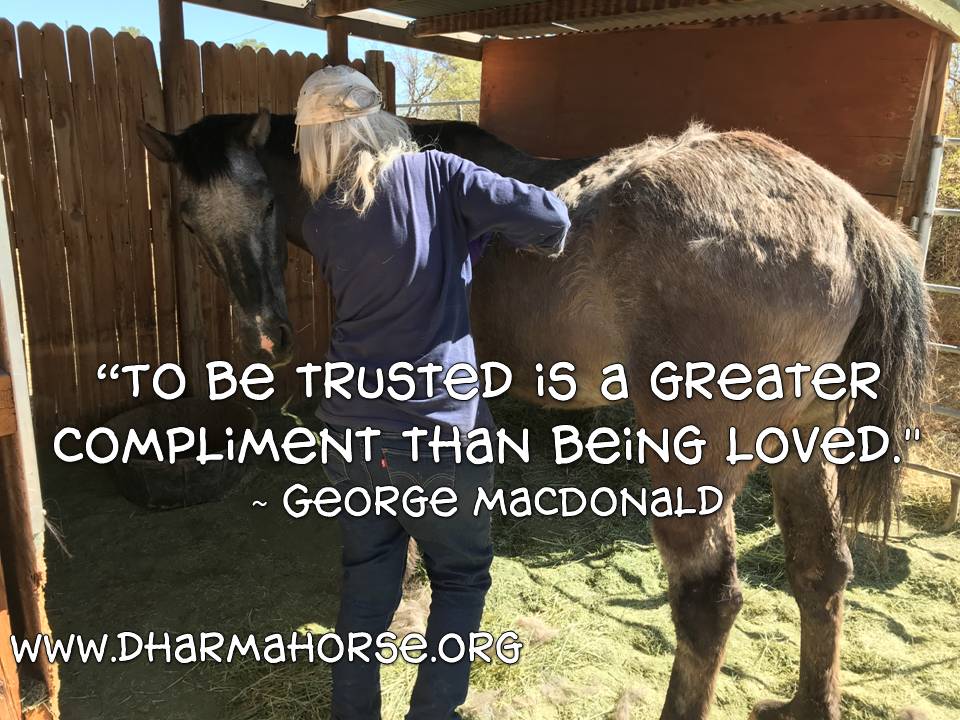
And rebuilding trust can take forever. At Dharmahorse we say “For a horse to trust us, we must be trustworthy”. The people who help us help the horses here are all compassion-based and trustworthy because any step backwards can be devastating for a horse.
For each elderly or compromised resident at the Sanctuary, it is quality of life that determines length of life. We stay acutely aware of any deterioration of comfort or joy and if we cannot support a return to well being, we show them the ultimate consideration and assist their passing. A horse here does not have to be perfect by any standard of beauty, performance or attitude. They simply need to be engaged in this process of living and in need of our care.



 Stablewomen