
I’ve been thinking a lot about “using” horses lately. Back in 2003, my four horses and I helped to establish an equine assisted therapies program locally. While the program had a theme that I did not agree with, the founders agreed that I was in control of my own horses (or I would not have done it!). My decision to participate was based upon helping youth and adults find the peace that I had lived with all my life in the presence of horses. And we did a lot of good.
I had seen some inappropriate horses (temperament-wise) brought into the program before I came on board. And the methodology (leaving clients with a halter and no explanation, to try to put it on a horse or leaving a group of non-horse people to try to move a horse around a paddock) worried me. I worried about humans getting hurt physically and the horses being injured emotionally.
At one point, with a blind-in-one-eye mare and an off the track Thoroughbred, the stable owner had insisted that these two horses were to be led about with a chain end lead rope (they easily spooked and bolted). When a woman came to evaluate the horses for the program being established, I was asked to help out. When I went to get the OTTB mare, the evaluator got right up in my face, took the chain and held it against my throat! She said, “how would you feel if I used this chain on you?”. I leaned into it, stared her in the eyes and said, “I’d figure I needed it if I was knocking people down and running over them”. She left. I was shaking. The husband of the barn owner asked me if I needed a glass of wine!
Later that day, with the evaluator’s daughters working the horses (chasing them) in a round pen, I sat nearby to watch. The lady sat beside me and told me that her daughters were champion barrel racers. I asked her what kind of bridles they used in competition. “Hackamores”, she said. “Mechanical hackamores?”, I asked. She nodded. “Don’t they have curb chains and possibly covered chain noses?”, I asked. She left.
I wasn’t happy with anything I was observing. The program was leasing space at that stable and trying to get “free horses”, volunteer helpers and, as a lifelong horsewoman, I realized that those involved knew little about equines. Fast forward – I ended up helping them.
While I was committed to helping the human clients, I was more dedicated to keeping the horses (especially my own) safe, sane and respected – rather than just being used as tools. To do that, I ran every client session when horses were involved. And I showed them how to halter a horse, then let then practice on my elder gelding. We groomed the horses, bathed the horses, free lunged them gently using communication and compassion. I lunged (slowly) clients mounted on my horses. We did a nighttime group session with the mothers of youth clients, and, with interns, we got every mom on my steady-as-a-rock TWH mare. A lot of good stuff happened.
We had a little girl who would run under my mare, no matter what you told her, how you explained it, the girl ran back and forth under the mare. I decided to make a fake horse with a sawhorse, papier mâché, blankets and cardboard… when the girl came again, I explained that she had to work with “Old Blue” until we could trust her with a real horse. She “groomed” Blue, put a halter on and off. I even found a little saddle and secured it on Blue so she could mount and dismount. She did end up with enough self-control to be with the “real” horses safely.
I have SO many stories from the years I spent, living with my horses, at the place we created for the Program. It continued after my horses and I left, and my hope was that we made an impression… that not all horses are suitable for therapy work, that horses are sentient and have feelings, that horses deserve respect. I was talking with friends today about how a horse knows what he knows – if he has never been tied, he won’t understand being tied. If a horse was never mounted from the off side (it’s important to do both equally), he might be confused or startled by it. Never been in a trailer/float – don’t expect him to hop in!
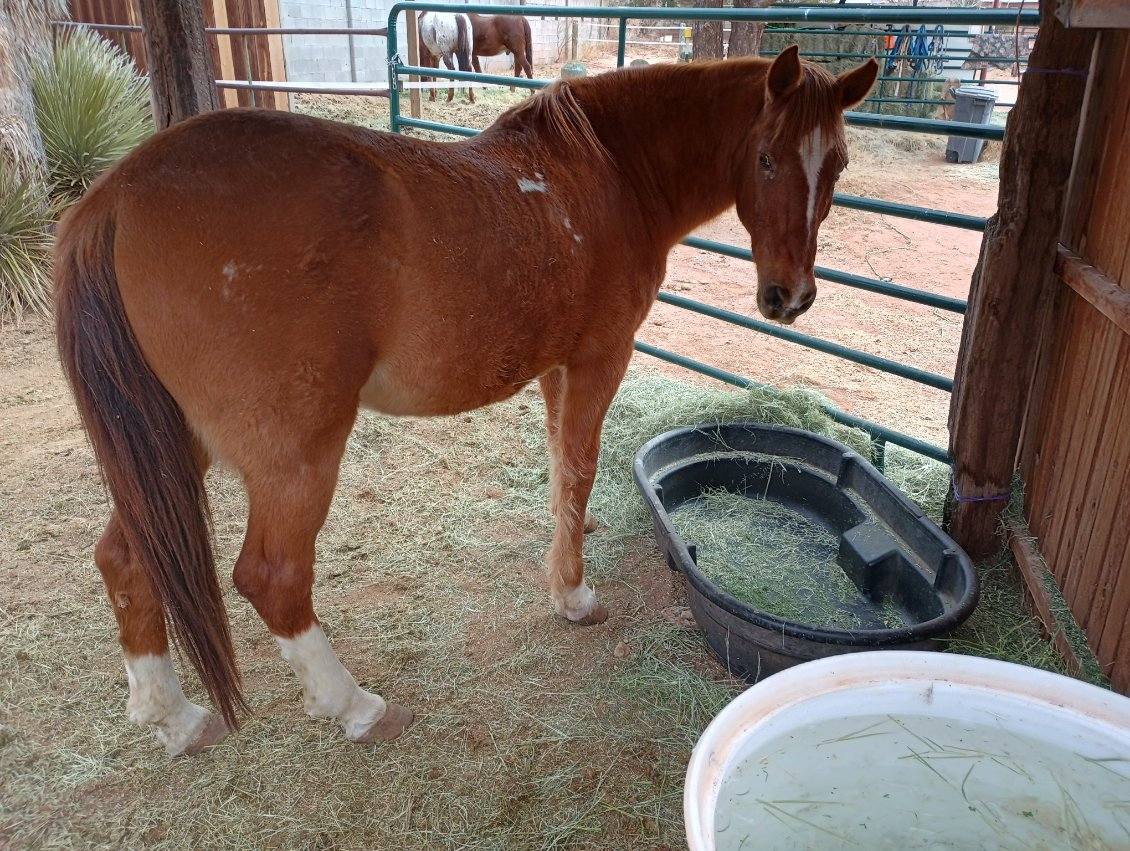
We humans can “use” horses in so many ways, discounting their needs, feelings and perspectives. We can also build a relationship with a horse based upon recognition of past experiences (for both parties), awareness of species specific and individual attributes and needs while thinking about what we are doing. It can take mere seconds to undo confidence and training in a horse, requiring years to repair – if it can be repaired. While I see so many owners/riders looking for methods and ideas to connect and find harmony with their horse(s), there are equally fervent horse owners obsessed with gimmicks and “quick fixes” to bend their horses to their will.
Those of us who grew up taking care of our horses ourselves, genuinely loving them and learning from them have a different way of approaching all aspects of our relationships with them. Our societies were built upon the backs of horses (and mules and donkeys), and we owe them our gratitude and compassion. Horses were used by humans to build, haul, travel, support and save us in ways we no longer require. So, we do not need to see equines through the eyes of objectification or glorification of ourselves. And even the realization of the innate gentleness and tendency to cooperate with us that equines possess does not mean that exploitation in areas of “healing” us is necessarily an honorable thing.
I’ve found myself deep in introspection through the decades of morphing into a Sanctuary. Here, we see horses (and mules) coming from one extreme to the other of care and handling. Some come from hoarding situations where a well-intentioned person got in over their head trying to save more than they could feed. Some were dumped in the desert to die. Some were beloved companions, and their human died. Some were cruelty seizures… yet these equines were able to forgive humans, given time and large doses of pure love.
In my early life as a Dressage and combined training rider, trainer and instructor, I was not in high demand (until my methods and holistic healing practices could turn a situation around) because I was “on the horse’s side”. Don’t get me wrong, I had many clients who wanted exactly that, but they were not competitive in a way that would “advance” my career and we were, none of us, prepared to sacrifice the wellbeing of a horse for competitive goals.
So, I plugged along writing (articles in Dressage & CT like “You have to listen, too” and “There is no aid for “oops”, on and on), teaching clinics, judging competitions (watching the horses and favoring those whose riders possessed compassion) and coaching my clients and their horses by recognizing effort and supporting their humane progress. As we all felt the deep connection and uplifting effects of our contact with horses, we realized that this whole experience was healing us.
We need to reciprocate. We need to heal them. Cherish them. And we need to teach those within our reach how to heal and cherish horses. While so much in this world is polarized, mankind’s relationship with the horse should not be. “Use them”/”Love them”… Our choice is so clear. Love is the honorable path. Would I use a chain end lead shank on a horse again? I’d prefer not to. I would prefer to connect with and slowly show a horse that I can be trusted (by being trustworthy) through my own behavior – rather than just needing to “get it done” or to placate a human’s needs… those things take time and patience. And love.
A mentor of mine, Mr. Charles deKunffy, taught me that “Love is the active promotion of the wellbeing of the love object”. Let’s choose that kind of love.
 Stablewomen