If you ask a hundred different horse persons a question, you’ll get a hundred different answers (maybe 99 or 98 because a couple might agree with each other). This isn’t because horse people are weird, it is because everyone has had their own experiences, successes and failures with their own individual equines. When something works, we store that away for future reference. Same thing when something fails.
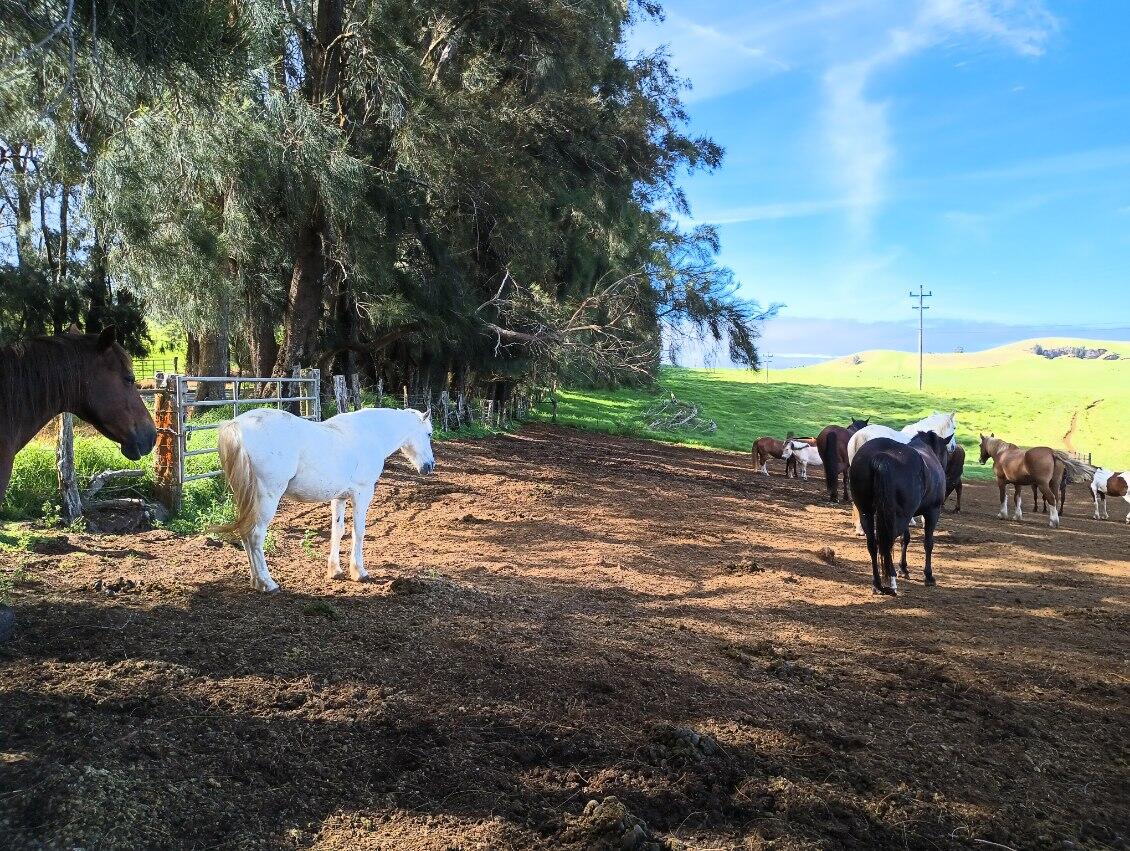
Our facilities are all different. Some of us have pastures. Some of us are in pure desert. Some of us need fully enclosed shelters for brutal, lingering winters. Some of us need only shade and windbreak for brutal, lingering summers. Fences need to be highly visible for large acreage. Fences need to be very sturdy for small spaces… you get where I’m going!
And some feed grass hay, some feed alfalfa, some feed both. The kind of hay one can find where they live can determine the diets, of course. On an island in Indonesia where small horses are moved by boat (!), their diet is fresh grass that they pull for them and sometimes rice bran. Some of us feed no grains or processed, composite feed; some feed concentrates. If the horses are healthy, that is the most important outcome.
When a person’s experience is with horses raised by their mare mothers and handled from birth by gentle humans, their perspective is very much different than someone who gentles wild horses, fully grown who have never seen a human being. And there are all imaginable situations in between. If I was going to show you how to change a tire, pretty much everyone would agree with my demonstration. If I am showing how to lead a horse, there will be many options and opinions. Here is where I will say, a horse needs to be handled in the way they were trained or by methods familiar to them. You can change those over time with compassionate direction, but you cannot expect a new horse to read your mind or just “know” the method you know.
If you watch social media, you see the expansion of critical comments and outrage, at times, over horsemanship found there. It is very easy to jump on a thread and berate someone else’s techniques or husbandry without necessarily knowing the full story. And I realize the goal sometimes is to get interactions of any type just to boost the monetization (we don’t participate in that). And actual neglect and/or abuse of an equine needs to be addressed, but not just with a few lines of condemnation on a platform – a horse suffering needs real life intervention by those with the power to help.
So, when you see a different way of riding, feeding, hoof care or healing, see it as a possible learning experience and, if no horse is harmed… if the results you see are to the benefit of the horse, tuck away that information in case you have a similar situation one day. Most people have experience with maybe a dozen horses in their lifetimes. Some of us have had literally hundreds or thousands. And when you “rescue” at-risk horses, you take on cherished family members whose owners cannot continue care, abused horses seized by authorities whose bodies are broken and/or souls are damaged, starved horses whose personalities are hidden by weakened, diminished conditions and some who never knew handling or kindness. Each equine must receive care according to those individual needs.
My Dressage mentor, Mr. deKunffy, told us our focus had to be, “Is the horse improved? Does the horse benefit?” That applies to everything, not just riding. And when we look at horses through their eyes, their experiences, we develop the empathy that builds compassion. Something is right if it helps the horse. Something is wrong if it harms the horse. Simple. We start with simple and develop our methods around best practices that help the horse.
Remember, a horse who has never worn a bit does not know what it is. Even a horse who has never worn a bitless bridle can be confused. If you put a halter on a horse differently than he is used to, he will be confused. Give him time to understand your way. I had an Arabian gelding I had raised from birth (he was orphaned at birth and that is a whole other story). He trusted me and had worn blankets. On a miserable, wet, cold day, I put a new blanket on him that made a “swishing” sound because its top layer was very slick and synthetic. He fainted. I had never seen a horse faint. I thought I had scared him to death, literally. He rocked back, his eyes rolled, his head twisted and he fell… unconscious. I rubbed his head and held it until he came back. When he stood, I pulled that blanket quickly and apologized like mad. But it was still cold and wet. I got an old blanket that was not noisy and he let me put it on him. I will never forget how his trust was not broken that day.
It all comes down to intentions and relationship. Behind those there needs to be an educated, skill building plan that never includes aggression or pain inflicted (that seems obvious, doesn’t it). And just as we all have reasons (from past experience) for our methodologies, horses have reasons for what they feel and do – coming from their past experiences. And I’ll admit, now that I’m thinking about it, some of us horse people can be weird…